
CloneUI vs Proofapp
Side-by-side comparison to help you choose the right AI tool.

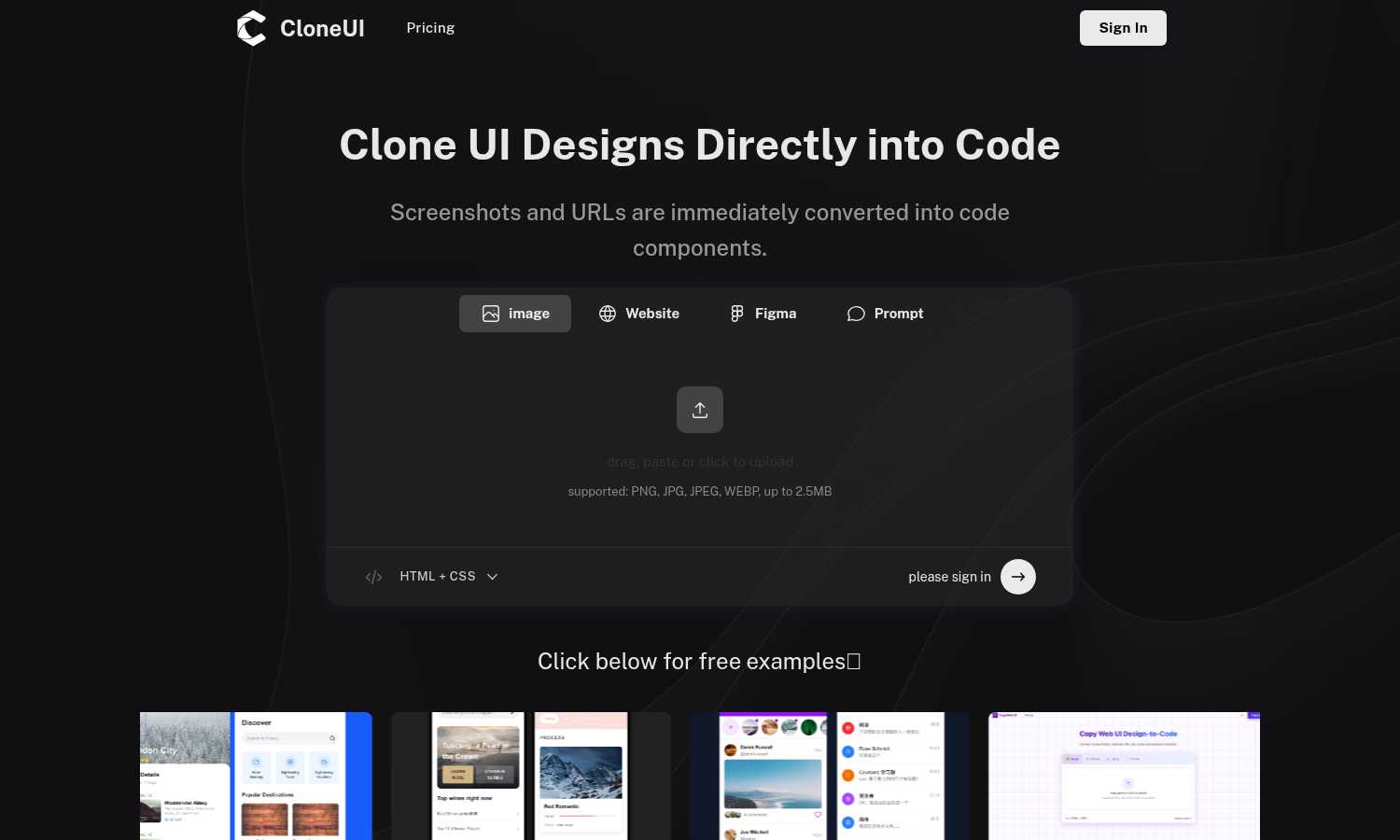
CloneUI effortlessly transforms screenshots and URLs into responsive, production-ready code for seamless web.
Last updated: March 1, 2026

Proofapp
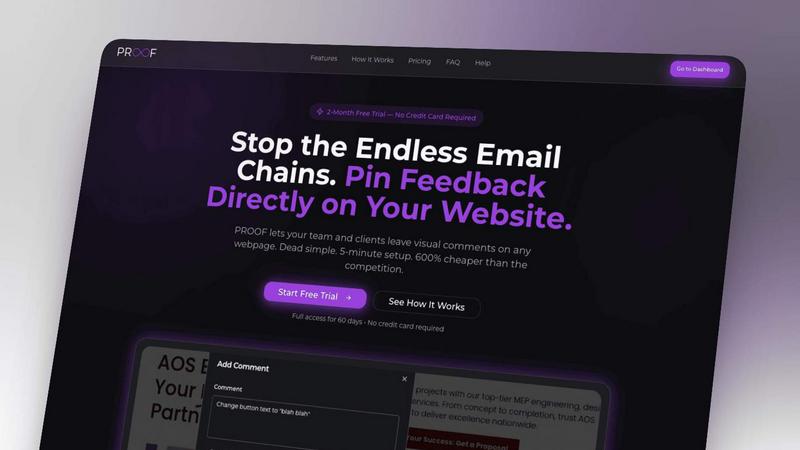
Stop endless email feedback by pinning comments directly on your website.
Last updated: March 4, 2026
Visual Comparison
CloneUI
Proofapp
Feature Comparison
CloneUI
Convert Screenshots to Code
With CloneUI's screenshot-to-code feature, users can simply upload their design images and receive pixel-perfect, responsive code in seconds. This functionality eliminates the need for tedious manual coding, making the design-to-development transition seamless.
Clone from URL
By entering a website URL, users can effortlessly replicate entire website structures. This feature allows for quick and easy cloning of web pages, ensuring that the code generated is an accurate reflection of the original design.
Convert Figma Designs to Code
CloneUI supports one-click conversion of Figma designs into clean code, making it an ideal choice for designers who want to streamline their workflow. This feature ensures that designs created in Figma are translated accurately into HTML, CSS, or JavaScript components.
Intelligent Component Recognition
Utilizing AI-powered technology, CloneUI automatically identifies and maps UI components within designs. This intelligent recognition ensures that the generated code is organized and adheres to best practices in coding, enhancing the overall quality of the output.
Proofapp
Visual Commenting
This is the heart of Proofapp. Instead of describing changes in lengthy emails, reviewers simply click on any part of the captured website screenshot to leave a comment. This pins the feedback directly to the exact pixel, eliminating confusing instructions like "move the button a bit to the left, under the header." Comments support rich threads, allowing for back-and-forth discussion directly on the design element in question, ensuring perfect clarity and context for every piece of feedback.
Multi-Breakpoint Testing
Proofapp understands modern web design requires a responsive approach. When you submit a URL, it automatically generates screenshots for both desktop and mobile views in one go. This allows teams and clients to review the user experience across critical breakpoints simultaneously, catching layout or functionality issues specific to each device without needing to manually resize browsers or take separate screenshots.
Secure, Account-Free Sharing
Streamlining client collaboration is a priority. With Proofapp, you can share a review project by generating a secure, shareable link. The powerful feature is that your clients or external stakeholders do not need to create an account or log in to view the screenshots and leave comments. This drastically reduces friction in the feedback collection process, making it as easy as sending a link, while you maintain control over project access.
Real-Time Collaboration & Resolution
Feedback becomes a live conversation. Team members and clients see new comments and replies appear in real-time, fostering a dynamic collaborative environment. Each comment can be marked as "resolved" once the feedback has been addressed, providing a clear, visual progress tracker for the entire project. This feature turns a static list of notes into an actionable workflow, ensuring nothing falls through the cracks.
Use Cases
CloneUI
Rapid Prototyping
Developers can use CloneUI to quickly turn design concepts into functional prototypes. This allows for faster iterations in the design process, enabling teams to test and validate ideas before committing to full development.
E-commerce Site Development
CloneUI is perfect for e-commerce developers who need to replicate existing website designs for new projects. By cloning from screenshots or URLs, they can save time and resources, ensuring their online stores are visually appealing and functional.
Freelance Projects
Freelancers can leverage CloneUI to enhance their service offerings by delivering production-ready code to clients quickly. This not only increases their efficiency but also improves client satisfaction through faster turnaround times.
Educational Use
CloneUI serves as an excellent educational tool for coding students and new developers. By allowing them to convert designs into code, they can learn best practices and understand how design elements translate into functional web components.
Proofapp
Freelancer-Client Website Approvals
Freelancers and independent contractors can use Proofapp to present website drafts to clients professionally. Instead of exchanging dozens of emails with attached, annotated images, they share a single Proofapp link. Clients click to give precise visual feedback, which the freelancer can then address and mark as resolved. This use case saves hours per project, reduces miscommunication, and presents a polished, efficient workflow that enhances client trust and satisfaction.
In-House Design & Development Handoff
Internal teams can streamline the handoff process between designers and developers. A designer can upload a live prototype or staging site URL to Proofapp. Developers can then click directly on elements to ask specific implementation questions, report bugs visually, or confirm design specs, all within the context of the design itself. This visual thread creates a clear audit trail and reduces back-and-forth in chat apps.
Marketing Team Landing Page Reviews
Marketing teams often need collective input on campaign landing pages from copywriters, designers, and managers. Proofapp allows the entire team to collaborate on a single page simultaneously. Stakeholders can pin comments on headlines, call-to-action buttons, or form fields, ensuring all feedback is consolidated visually in one place, speeding up the revision process before the page goes live.
Agency Managing Multiple Client Projects
Digital agencies managing several client websites can use Proofapp as a centralized feedback hub for all projects. They can organize reviews by client or project, using the platform's dashboard to track open and resolved comments across all active work. The account-free sharing for clients simplifies their process, while the agency benefits from a standardized, professional review system that scales with their workload.
Overview
About CloneUI
CloneUI is an advanced AI-driven tool that revolutionizes the way developers and designers convert website designs into production-ready code. With its intuitive interface, CloneUI allows users to upload screenshots or enter URLs, instantly generating clean and responsive HTML, CSS, React, or Vue components. This powerful tool is designed for professionals and novices alike, streamlining the workflow by automating the time-consuming task of manual coding. By utilizing CloneUI, users can focus on their core creative processes and project execution, rather than getting bogged down in the minutiae of coding. The main value proposition of CloneUI lies in its ability to produce high-quality output that meets industry standards while significantly reducing development time. Whether you're a freelance developer, a design team, or a startup looking to speed up your web development process, CloneUI is your go-to solution for transforming designs into functional code with remarkable ease and efficiency.
About Proofapp
Proofapp is a visual feedback and collaboration platform designed to eliminate the chaos of traditional website and design review processes. It transforms how designers, developers, marketers, and their clients work together by making feedback visual, contextual, and organized. The core idea is simple: stop the endless email chains and vague notes. Instead, users paste any website URL, and Proofapp automatically captures clean screenshots at both desktop and mobile breakpoints. Reviewers can then click directly on the image to pin comments, creating a precise, visual dialogue that leaves no room for misinterpretation. Built with a mobile-first and user-centric approach, the platform requires no accounts for clients, offers real-time notifications, and integrates seamlessly into existing workflows. Whether you're a solo freelancer needing to collect client sign-off or an in-house team managing multiple project stakeholders, Proofapp's value proposition is clear: save significant time, reduce revision cycles by up to 60%, and ship higher-quality work faster by keeping all feedback actionable and in one centralized, visual dashboard.
Frequently Asked Questions
CloneUI FAQ
Which input formats are compatible with CloneUI?
CloneUI supports various image formats for uploads, including PNG, JPG, JPEG, and WEBP, with a maximum file size of 2.5MB. This ensures flexibility for users when uploading their design screenshots.
How is the code generated?
The code is generated using advanced AI algorithms that analyze the uploaded designs or URLs. CloneUI interprets the visual elements and converts them into clean, responsive code, ready for production use.
Supported frameworks?
CloneUI allows users to export their code in multiple frameworks, including React, Vue, and plain HTML/CSS. This flexibility makes it easier for developers to integrate the output into their preferred tech stack.
Is the generated code customizable?
Yes, the generated code can be customized further to meet specific project requirements. Users can edit the output to align with their design vision or functionality needs, ensuring maximum adaptability.
Proofapp FAQ
How do reviewers leave comments without an account?
The process is designed for maximum ease. When you create a project in Proofapp and share the generated secure link, anyone with that link can view the screenshots. They can click anywhere on the image to leave a comment, add attachments, and reply to threads immediately, without any sign-up form or login barrier. Account management is handled solely by the project creator.
Does Proofapp work on live websites or just static images?
Proofapp works directly on live websites. You simply paste any publicly accessible URL into the platform. It then uses its system to capture fresh, current screenshots of that live page at the defined breakpoints. This ensures feedback is always based on the most up-to-date version of the site or web app.
Can I review more than one page at a time?
Yes, Proofapp supports multi-page projects. You can add multiple URLs to a single project, and it will capture screenshots for each page. This is ideal for reviewing user flows, entire website sections, or a set of landing pages, keeping all related feedback organized together in one collaborative workspace.
What kind of files can I attach to comments?
To provide complete context, Proofapp allows users to attach various files directly to their comments. This typically includes images (like alternative design mockups), documents (PDFs, Word files), and other common file types. This ensures that all relevant reference material is pinned directly to the discussion point, avoiding separate email attachments.
Alternatives
CloneUI Alternatives
CloneUI is an innovative AI-driven tool designed to convert screenshots and URLs into responsive, production-ready code, making it an essential resource in the design tools and development categories. Users often seek alternatives to CloneUI due to factors like pricing, feature sets, platform compatibility, or personal preferences regarding user experience. The choice of an alternative should focus on functionality that aligns with specific project needs, ease of integration with existing workflows, and the quality of code output. When exploring alternatives, consider the range of features offered, such as conversion accuracy, support for various design tools, and the ability to generate clean, maintainable code. Additionally, evaluate the user interface and ease of use, as well as customer support options, to ensure that the chosen solution meets your requirements effectively.
Proofapp Alternatives
Proofapp is a visual feedback and website review platform in the design tools category. It streamlines collaboration by letting teams and clients pin comments directly on live website screenshots, eliminating messy email threads and vague feedback. Users often explore alternatives for various reasons. These can include budget constraints, the need for specific integrations like project management apps, or requirements for more advanced features such as video feedback or user testing capabilities beyond static review. When choosing a different tool, prioritize a mobile-friendly experience and seamless workflow integration. Look for core functionality like in-context commenting, real-time notifications, and a simple review process for clients. The right platform should centralize feedback visually to keep projects moving fast.