
Crawlkit vs SERPView
Side-by-side comparison to help you choose the right AI tool.

Crawlkit
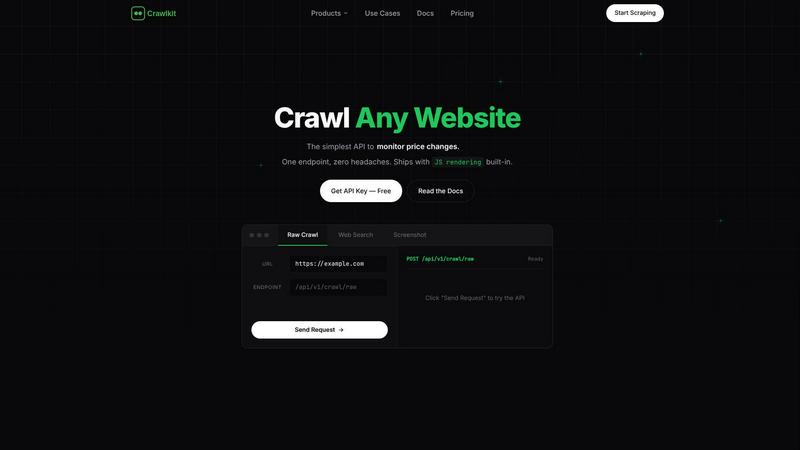
Crawlkit is a simple API that turns any website into structured data with one call.
Last updated: February 28, 2026

SERPView
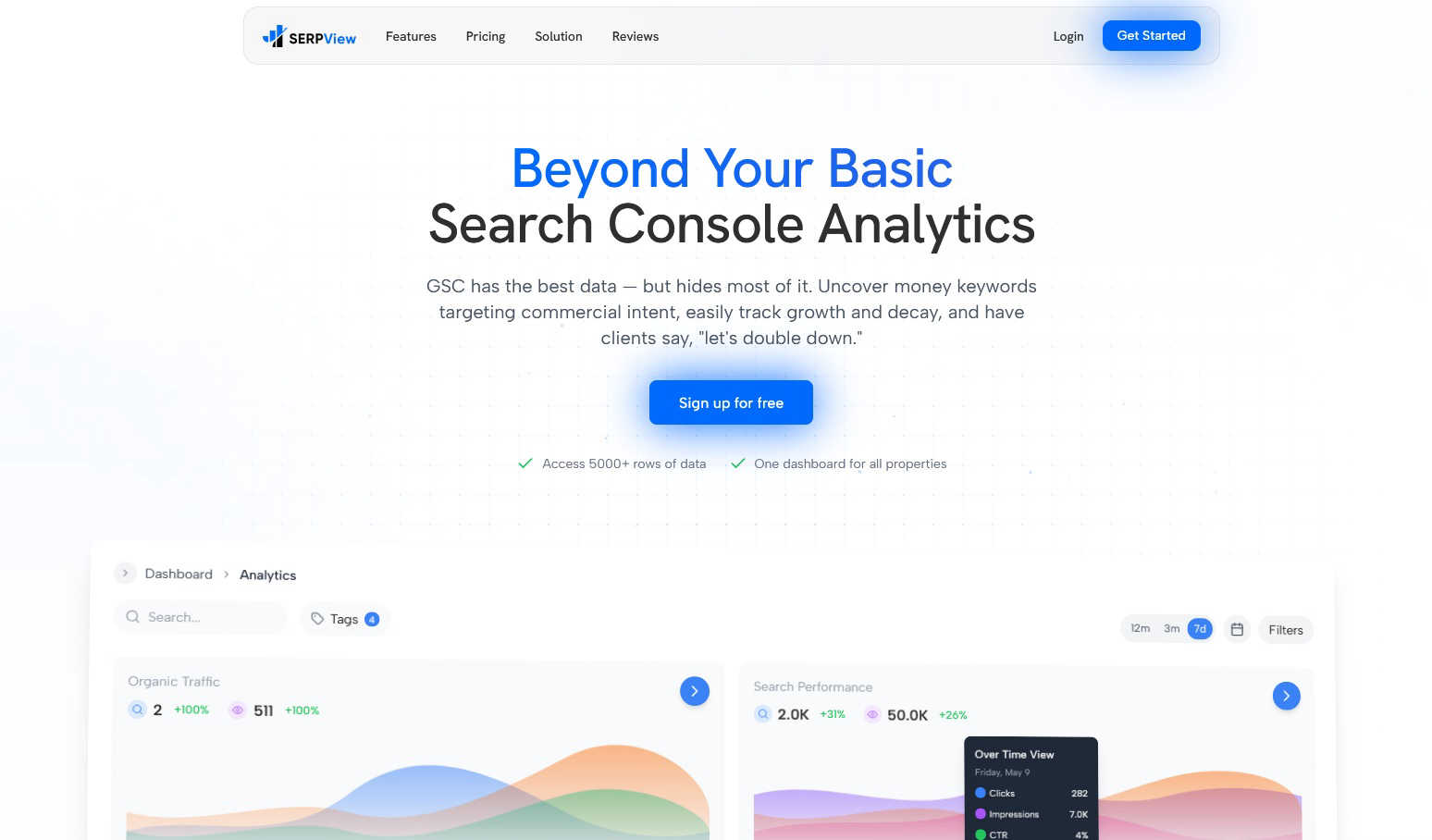
SERPView transforms Google Search Console data into actionable insights for unlimited SEO tracking and performance.
Last updated: March 1, 2026
Visual Comparison
Crawlkit
SERPView
Feature Comparison
Crawlkit
Unified API for Every Data Source
Crawlkit provides a single, consistent API endpoint to extract structured data from a wide variety of sources. Whether you need data from LinkedIn company pages, Instagram profiles, Google Play Store reviews, or general web searches, you use the same simple request format. This eliminates the need to juggle multiple specialized tools or write custom parsers for each website, streamlining your development workflow and reducing code complexity significantly.
Built-in Anti-Bot Evasion & Reliability
The platform automatically handles the technical challenges that break most scrapers. It manages a rotating pool of residential proxies to avoid IP bans, executes JavaScript to render dynamic content fully, implements smart retry logic for failed requests, and navigates rate limits. This ensures you get complete, clean data on every request without having to build, monitor, or maintain this complex infrastructure yourself.
Developer-First SDK & Integrations
Crawlkit is built for seamless integration into your existing stack. With an official Node.js SDK and a simple HTTP API, it works with any programming language or platform. It integrates effortlessly with popular tools and environments like AWS, Cloud Run, Puppeteer, and OpenAI, giving you the flexibility to incorporate web data into your workflows, automations, and AI applications without vendor lock-in.
Transparent, Credit-Based Pricing
Crawlkit operates on a simple pay-as-you-go credit system. Each API call costs a fixed number of credits, with costs clearly listed per endpoint. Credits never expire, and you only pay for successful requests. This model provides predictable costs, no monthly commitments, and volume discounts for scaling teams, making it easy to budget and scale your data operations.
SERPView
Performance Tracking
With SERPView, users can access up to 50,000 rows of Google Search Console data, far surpassing GSC's 1,000-row limit. This feature allows SEO professionals to comprehensively track clicks, impressions, CTR, and average positions without restrictions, enabling more informed decision-making.
Keyword Analysis
SERPView excels in uncovering high-value keywords with commercial intent. Users can identify new opportunities and monitor position changes over time, ensuring that they are always targeting the most relevant and profitable keywords for their business.
Page Analysis
Analyze the performance of individual web pages to determine which content resonates best with audiences. SERPView identifies underperforming pages and suggests optimization opportunities, helping marketers enhance their content strategy effectively.
Mobile vs Desktop Analysis
This feature allows users to compare performance metrics between mobile and desktop users, offering insights into where to focus their optimization efforts. By identifying trends and performance discrepancies, marketers can tailor their strategies to improve rankings and user experience.
Use Cases
Crawlkit
CRM and Lead Enrichment
Automatically enrich contact profiles in your CRM with fresh, professional data. Use Crawlkit's LinkedIn API to pull job titles, current company information, experience history, and other details directly into your sales platform. This keeps your lead data accurate and actionable, empowering your sales team with better context for outreach without manual research.
Social Media Competitor Tracking
Monitor your competitors' social media performance effortlessly. Schedule weekly calls to Crawlkit's Instagram API to track follower growth, engagement rates on posts, and content strategy. This structured data allows you to analyze trends, benchmark your performance, and make informed decisions about your own social media marketing strategy.
App Store Review Analysis
Gather user feedback at scale to improve your product. Use Crawlkit to pull reviews and ratings from the Google Play Store and Apple App Store. Analyze this data to identify common pain points, feature requests, and sentiment trends. This direct insight from your user base is invaluable for guiding product development and prioritizing updates.
Market Research & Price Monitoring
Conduct comprehensive market research by extracting product details, specifications, and pricing from e-commerce websites and directories. Crawlkit can turn these sites into structured data feeds, allowing you to monitor competitor pricing, track product availability, and analyze market trends over time to inform your business strategy.
SERPView
Comprehensive SEO Reporting
SEO teams can utilize SERPView to generate in-depth reports that consolidate data from multiple Google Search Console properties. This functionality streamlines the reporting process, making it easier for teams to analyze overall site performance and make strategic adjustments.
Keyword Opportunity Identification
Marketers can leverage SERPView to uncover lucrative keyword opportunities that may have previously gone unnoticed. By tracking keyword rankings and performance, they can refine their content and advertising strategies to better align with user intent.
Content Optimization
Content creators can use SERPView to analyze which pages are performing best and which ones need improvement. This enables teams to prioritize updates and enhancements based on data-driven insights, ultimately boosting organic search visibility.
International SEO Strategy Development
Businesses targeting global markets can benefit from SERPView's international SEO insights, which track performance across different countries and languages. This data helps marketers optimize their strategies to cater to regional audiences effectively.
Overview
About Crawlkit
Crawlkit is the developer-centric web data extraction platform designed to turn the complex, frustrating task of web scraping into a simple, reliable API call. Built for developers and data teams, it eliminates the need to build and maintain your own scraping infrastructure. Modern websites are protected by sophisticated anti-bot systems, rate limits, and dynamic JavaScript, making data collection a constant battle of rotating proxies, headless browsers, and debugging broken scripts. Crawlkit handles all of this complexity for you. You send a single request with a URL, and the platform automatically manages proxy rotation, JavaScript rendering, retry logic, and blocking evasion. This allows you to focus entirely on analyzing and utilizing the data, not the arduous process of collecting it. With a single, consistent API interface, you can extract raw HTML, perform structured web searches, capture full-page visual snapshots, and gather professional data from platforms like LinkedIn and Instagram, all with industry-leading success rates. It's the seamless, scalable bridge between the web's vast information and your applications, enabling you to build data-driven features faster without the operational overhead.
About SERPView
SERPView is the ultimate mobile-first solution designed to enhance the Google Search Console (GSC) experience for SEO professionals and digital marketers. It addresses the common limitations of GSC, such as the restrictive 1,000-row data limit, by providing access to over 50,000 rows of unfiltered search performance data. This powerful analytics platform centralizes actionable intelligence, allowing users to manage multiple website properties seamlessly from a single, intuitive dashboard. SERPView empowers marketers to uncover hidden keyword opportunities, track performance across various devices and countries, and correlate trends with Google's algorithm updates. Whether users are in the office on a desktop or on the go with a mobile device, SERPView equips them with the insights needed to make rapid, data-driven decisions. Ultimately, SERPView goes beyond mere data presentation; it reveals the compelling story behind a brand's search presence.
Frequently Asked Questions
Crawlkit FAQ
How does Crawlkit handle websites with heavy JavaScript?
Crawlkit uses a headless browser automation system to fully render pages, just like a real user's browser. It waits for all dynamic content, AJAX calls, and JavaScript frameworks to load completely before extracting the data. This ensures you receive the final, fully-rendered HTML and not just the initial page source, guaranteeing complete results for modern web applications.
What happens if an API request fails?
Crawlkit employs robust retry logic with different proxy servers and request parameters. If a request ultimately fails after these attempts, you are not charged. The platform only consumes credits for successful data extraction, ensuring you only pay for usable results and maintaining cost predictability for your projects.
Can I use Crawlkit with programming languages other than Node.js?
Absolutely. While Crawlkit offers a convenient Node.js SDK, its core is a simple HTTP REST API. This means you can use it with any programming language that can make HTTP requests, such as Python, Go, Ruby, Java, or PHP. You can easily integrate it into your backend, scripts, or serverless functions.
Do credits expire, and are there any monthly limits?
No, credits never expire. You purchase credits and use them at your own pace. There are also no monthly commitments or rate limits on your API usage. You can make one request a month or thousands a day, scaling up and down based on your project's needs without penalty.
SERPView FAQ
What is SERPView?
SERPView is a mobile-first analytics platform that enhances Google Search Console by providing access to over 50,000 rows of search performance data. It simplifies SEO reporting and enables deeper insights for digital marketers.
How does SERPView improve data access compared to Google Search Console?
Unlike Google Search Console, which limits data access to 1,000 rows, SERPView grants users access to comprehensive search performance data, allowing for more detailed analysis and reporting without the usual restrictions.
Can I manage multiple Google Search Console properties with SERPView?
Yes, SERPView allows users to connect and manage multiple Google Search Console properties from a single dashboard, streamlining the SEO reporting process and making it easier to monitor overall performance.
Is SERPView suitable for mobile users?
Absolutely. SERPView is designed with a mobile-first approach, ensuring that users can access and analyze their SEO data seamlessly, whether they are on a desktop in the office or on their phone while on the go.
Alternatives
Crawlkit Alternatives
Crawlkit is a developer-centric web data extraction platform, falling into the analytics and data category. It simplifies accessing website data and screenshots through a single, reliable API, handling complexities like JavaScript rendering and anti-bot systems automatically. Users often explore alternatives for various reasons. This could be due to specific budget constraints, a need for different feature sets like advanced data parsing, or requirements to integrate with a particular tech stack or platform. It's a normal part of finding the perfect tool for a project's unique workflow. When evaluating other options, focus on key criteria. Consider the reliability and success rate against modern websites, the simplicity and clarity of the API, the robustness of built-in blocking evasion, and the overall total cost of ownership when factoring in your development and maintenance time.
SERPView Alternatives
SERPView is a mobile-first analytics platform that enhances Google Search Console by providing deeper insights into search performance data. As an essential tool for SEO professionals and digital marketers, it enables users to track extensive metrics beyond the limitations of GSC, making it easier to analyze and optimize their online presence. Users often seek alternatives to SERPView for various reasons, including pricing, feature sets, or specific platform requirements that better fit their unique workflows. When considering alternatives, it’s crucial to evaluate the depth of data access, user interface intuitiveness, and the ability to generate actionable insights tailored to your needs. The goal is to find a solution that not only meets your technical demands but also enhances your overall user experience.