
Nani vs Project20x
Side-by-side comparison to help you choose the right AI tool.

Nani organizes your AI image prompts and creations for a seamless, supercharged workflow.
Last updated: February 28, 2026

Project20x
Project20x is your AI governance app, ensuring compliance and effectiveness for modern teams.
Last updated: March 4, 2026
Visual Comparison
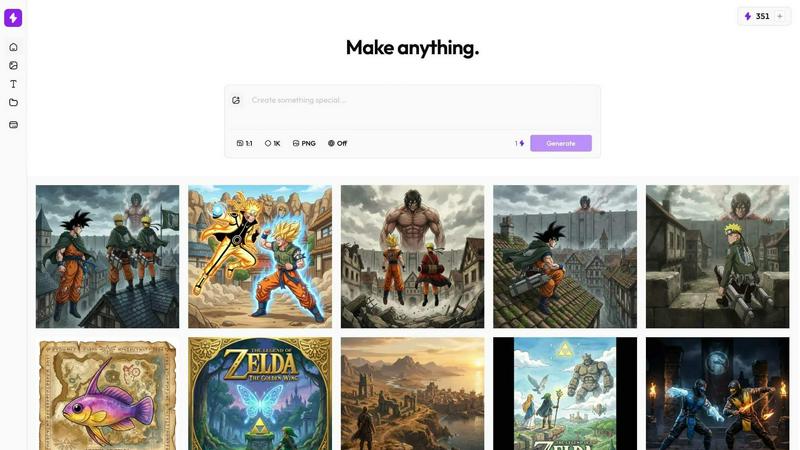
Nani
Project20x
Feature Comparison
Nani
Nano Banana Pro Engine
Experience rapid, high-fidelity image generation powered by Google's cutting-edge Nano Banana Pro (Gemini) technology. Simply type your prompt, choose your aspect ratio and resolution, and get stunning results in seconds. Every image is generated without any visible watermark, giving you clean, professional-grade assets ready for use in your projects, all from a streamlined mobile interface.
Reusable Prompt Sets
Stop retyping and reinvent your workflow with Sets. Group related images together and save their exact prompts as reusable templates. This is perfect for maintaining consistent characters, art styles, or project themes across multiple generations. Need to tweak a scene? Just open your Set, make a small adjustment, and generate again, keeping your creative vision perfectly intact without starting from scratch.
Intuitive Organization Tools
Keep your growing library perfectly tidy with powerful organization features designed for mobile. Create custom folders, filter your gallery to show only favorited images, and use bulk selection to manage or export multiple creations at once. These tools scale seamlessly with your output, ensuring you can always find yesterday's masterpiece in an instant, no matter how much you create.
Seamless Collaborative Workflow
Share and iterate on creations with effortless collaboration built into the app. Drag and drop images as visual references for new prompts, share any creation via a public link, and even let others recreate your work in their own account with your prompt sets. This turns Nani into a connected creative hub, perfect for team projects or sharing inspiration with a community.
Project20x
Governance Layer: AI-Powered Policy Crafting
This foundational layer assists lawmakers in developing robust, clear legislation. Using a ten-step AI methodology, it analyzes draft policies for linguistic clarity, internal consistency, and potential conflicts with existing laws. It acts as a collaborative digital advisor, ensuring that policies are sound, understandable, and effective from their very inception, long before they are implemented.
Management Layer: Rules as Code Automation
Once a policy is approved, this layer automatically translates the legal text into functional, executable code. This "Rules as Code" approach turns static regulations into dynamic, automated workflows for government agencies. It eliminates manual interpretation, reduces administrative overhead, and ensures consistent application of rules across all digital systems and processes.
Interface Layer: 24/7 Citizen AI Agents
This is the public-facing portal where citizens interact with government. It provides round-the-clock access to AI agents that are expertly trained on the codified policies from the Management Layer. Users can get instant, accurate answers to complex questions, apply for services, check eligibility, and complete transactions through a simple, conversational interface, much like using a helpful mobile app.
Full-Stack Transparency & Audit Trail
Project20x is built with accountability at its core. Every action, from a policy edit to a citizen query, is logged on an immutable audit trail. This ensures all governmental activities are traceable and quantifiable. The system operates with rigorous human oversight, providing complete transparency into how decisions are made and how automated outcomes are derived, building essential public trust.
Use Cases
Nani
Consistent Character Design
Illustrators and comic artists can use Nani's Sets to lock in the visual details of a character—like their face, clothing, and style—into a reusable prompt. This allows for generating the same character in countless different poses, actions, and environments, ensuring perfect consistency across an entire story or project without manual redrawing or prompt guesswork.
Brand Asset & Marketing Content Creation
Marketing teams and social media managers can maintain a cohesive brand aesthetic by creating Sets for their brand's color palette, tone, and style. Quickly generate a batch of on-brand images for a campaign, organize them into project-specific folders, and easily locate assets for different platforms, all while ensuring every visual aligns with brand guidelines.
Rapid Concept Ideation & Mood Boards
Designers and creative directors can use Nani for fast visual brainstorming. Generate multiple variations of a concept, favorite the best ones, and drag them together as references to explore new directions. This rapid iteration cycle is ideal for building mood boards, pitching ideas to clients, or overcoming creative block with instant visual feedback.
Structured Content Production
Bloggers, educators, and content creators who need regular visual assets can build a library of prompt Sets for different content types (e.g., blog headers, social posts, course illustrations). This system turns image generation into a repeatable, efficient task, allowing them to produce high-quality, themed visuals for each new piece of content in a fraction of the time.
Project20x
Streamlining Business Licensing & Permits
A business owner can use the Project20x interface to navigate the complex requirements for a new license. The AI agent, trained on all relevant municipal codes, guides them step-by-step, checks their application for completeness in real-time, and automates the submission to the correct agency, drastically reducing processing time and confusion.
Legislative Drafting & Analysis for Lawmakers
A legislative team drafting a new environmental bill uses the Governance Layer. The AI analyzes the draft, flags ambiguous language, identifies potential overlaps with existing federal regulations, and suggests clearer terminology. This results in more precise, legally sound legislation that is easier for agencies to implement and for the public to understand.
Automated Benefits Eligibility & Distribution
A citizen seeking housing assistance can converse with an AI agent via the Interface Layer. The agent confidentially assesses their situation against the latest codified eligibility rules, instantly informs them of their qualification status, and can initiate the application process, ensuring fast, fair, and consistent access to critical support services.
Agency Workflow Optimization
A government agency like the Department of Education uses the Management Layer to codify a new student grant policy. The system automatically generates the digital forms, approval routing, and compliance checks. Caseworkers are freed from manual rule-checking, allowing them to focus on complex cases and citizen support, while ensuring 100% rule adherence.
Overview
About Nani
Nani is the ultimate mobile-first workflow companion for AI image generation, built for creators who need to produce consistently, not just occasionally. It transforms the often chaotic and repetitive process of prompting AI into a smooth, organized, and efficient creative pipeline. Powered by Google's advanced Nano Banana Pro (Gemini) model, Nani delivers high-quality, watermark-free images in seconds. But its real superpower is how it structures your work: by letting you save and reuse prompt sets, organize images into folders, and manage generations at scale. It's designed for artists, designers, marketers, and content creators who are tired of juggling multiple tabs, rewriting the same prompts, and losing track of their best creations. Nani gets the administrative hassle out of your way, so you can focus entirely on bringing your ideas to life, directly from your phone or tablet.
About Project20x
Project20x is the AI-native operating system for modern government, transforming how policies are created, managed, and accessed. Designed for government agencies, lawmakers, and citizens, it bridges the gap between complex regulatory frameworks and user-friendly digital services. The platform's core mission is to revolutionize governmental operations by making them more transparent, efficient, and accessible to everyone. It achieves this through a unique three-layer architecture: Governance, Management, and Interface. This structure ensures that from the initial drafting of legislation to the final citizen interaction, every step is enhanced by AI for clarity, automation, and ease of use. Project20x delivers a seamless, app-like experience, putting powerful governmental tools and services directly into the hands of users, 24/7. Its value proposition is clear: to build accountable, traceable, and quantifiable government processes that foster greater public trust and engagement.
Frequently Asked Questions
Nani FAQ
How do I get started with Nani?
Getting started is simple and free. Just sign up for an account—no credit card is required. You'll instantly receive 5 free credits to experiment with the platform. From there, you can start typing prompts, creating Sets, and organizing your images immediately. All features are unlocked from day one, so you can experience the full power of Nani's workflow from your very first session.
What is the pricing model?
Nani uses a simple, transparent credit-based system. You only pay for the images you generate, with no subscriptions or monthly commitments. Pricing starts at approximately 30 cents per image generation for 1K or 2K resolutions. You purchase credits as you need them, and they never expire. Web search for prompt context is included at no extra cost, and larger purchases come with bonus credits.
Can I use the generated images commercially?
Yes, you own the images you create with Nani. The platform is designed to produce professional, watermark-free assets that you are free to use in your personal and commercial projects. This includes marketing materials, product designs, published content, and more. Always ensure your prompts and usage comply with Nani's Terms of Service.
How does Nani handle collaboration and sharing?
Nani makes sharing and collaboration intuitive. You can share any generated image via a public link, allowing others to view it without needing an account. For deeper collaboration, you can let other Nani users recreate your work; they can generate new images using your exact prompt setup within their own account, making it perfect for team-based projects or creative partnerships.
Project20x FAQ
How does Project20x ensure the security of sensitive government and citizen data?
Project20x is built with enterprise-grade security as a foundational principle. All data is encrypted in transit and at rest. The platform features robust access controls, comprehensive audit trails for every action, and is designed to comply with stringent government security standards. Human oversight is integral to all automated processes, ensuring security protocols are always maintained.
Can Project20x integrate with existing government IT systems?
Yes, a core design principle of Project20x is interoperability. The platform is built with modern APIs and a modular architecture, allowing it to connect seamlessly with legacy databases, case management systems, and other critical government software. This ensures a smooth transition and enhances existing technological investments rather than replacing them outright.
How accurate are the AI agents when answering complex citizen questions?
The AI agents are uniquely accurate because they are not trained on general internet data but directly on the official, machine-readable "Rules as Code" from the Management Layer. This source-of-truth training, combined with continuous updates as policies change and a feedback loop for corrections, ensures responses are precise, current, and legally faithful.
What happens if a policy changes? How quickly does the system update?
When a policy is amended and officially approved through the Governance Layer, the update is immediately codified in the Management Layer. This change is then propagated to the training data for the Interface Layer's AI agents. This end-to-end integration allows the entire system, including public-facing services, to update almost in real-time, ensuring citizens always interact with the most current rules.
Alternatives
Nani Alternatives
Nani is a specialized AI workflow tool designed to organize and streamline the process of AI image generation. It falls into the category of AI assistants, specifically helping creators manage prompts, reference images, and visual iterations efficiently. It's built for those who need consistency and speed in their creative projects. Users often explore alternatives for various reasons. Some may have specific budget constraints, while others might need features tailored to different platforms or operating systems. The search can also be driven by a desire for different AI models, unique collaboration tools, or a simpler interface that better matches their personal workflow. When evaluating other options, consider your core needs. Look for strong organizational capabilities, support for reusable assets, and a smooth iteration process. The ideal tool should reduce repetitive tasks, integrate well with your existing apps, and ultimately let you focus on creativity rather than administrative overhead.
Project20x Alternatives
Project20x is a specialized AI governance platform designed for government agencies and lawmakers. It helps translate complex policies into clear, automated digital workflows and public-facing AI agents. This places it in a niche category focused on public sector digital transformation and regulatory technology. Users often explore alternatives for several reasons. Budget constraints or specific procurement processes can drive the search for different pricing models. Some organizations might need a tool that integrates with existing legacy systems, or they may require features tailored for a different level of government or a specific regulatory domain. When evaluating other options, consider the platform's core methodology for policy analysis and "Rules as Code" automation. Look for strong security credentials and audit trails, as handling government data demands the highest standards. Finally, assess the citizen engagement tools to ensure they provide the intuitive, 24/7 access that modern public service delivery requires.