
Pathoura vs Project20x
Side-by-side comparison to help you choose the right AI tool.

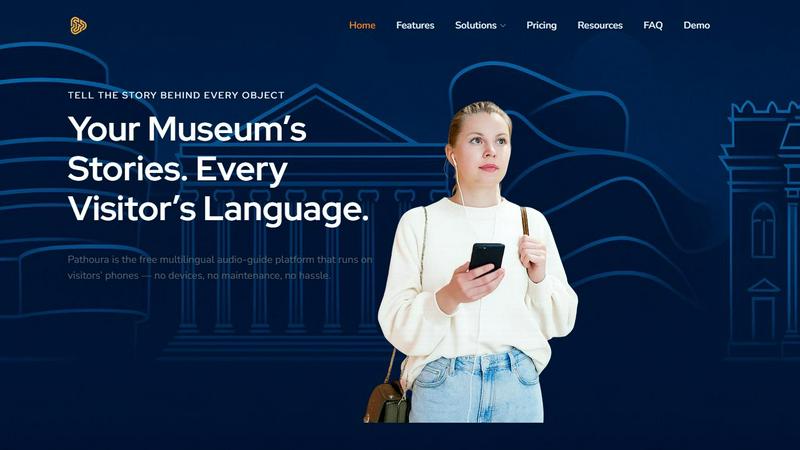
Pathoura creates instant multilingual audio guides for museums that run on any visitor's smartphone.
Last updated: March 1, 2026

Project20x
Project20x is your AI governance app, ensuring compliance and effectiveness for modern teams.
Last updated: March 4, 2026
Visual Comparison
Pathoura
Project20x
Feature Comparison
Pathoura
AI-Powered Translation & Narration
Pathoura's core engine uses advanced AI to automatically translate your exhibit text into more than 20 languages. Beyond simple translation, it generates expressive, human-sounding audio narrations in seconds. This feature removes the need for expensive studio recordings and complex multilingual project management, allowing you to preview and fine-tune the audio before publishing, ensuring clarity and accessibility for a global audience.
No-App, Mobile-First Access
Visitors access audio guides instantly using their own smartphones without downloading a dedicated app. By scanning a QR code placed next to an exhibit or entering a simple exhibit number into a mobile web page, they get immediate audio playback. This mobile-centric approach guarantees a barrier-free entry for all visitors, reduces friction, and works seamlessly across any modern device with a browser and internet connection.
Intuitive Web Dashboard for Management
Institutions manage their entire audio guide ecosystem through a seamless, user-friendly web dashboard. This central hub allows staff to effortlessly create and organize tours, insert exhibit details, upload images, design visitor routes, and update content in real-time. The platform is designed for everyday operations, enabling instant updates to reflect new research or changing exhibitions without any technical setup.
Built-in Monetization & Analytics
Pathoura includes options for cultural sites to generate sustainable revenue directly through their audio guides. Institutions can set up ticketing or donation prompts within the visitor experience. Coupled with insights into visitor engagement, this feature helps organizations understand audience behavior while creating a new, scalable revenue stream to support their educational mission and operational sustainability.
Project20x
Governance Layer: AI-Powered Policy Crafting
This foundational layer assists lawmakers in developing robust, clear legislation. Using a ten-step AI methodology, it analyzes draft policies for linguistic clarity, internal consistency, and potential conflicts with existing laws. It acts as a collaborative digital advisor, ensuring that policies are sound, understandable, and effective from their very inception, long before they are implemented.
Management Layer: Rules as Code Automation
Once a policy is approved, this layer automatically translates the legal text into functional, executable code. This "Rules as Code" approach turns static regulations into dynamic, automated workflows for government agencies. It eliminates manual interpretation, reduces administrative overhead, and ensures consistent application of rules across all digital systems and processes.
Interface Layer: 24/7 Citizen AI Agents
This is the public-facing portal where citizens interact with government. It provides round-the-clock access to AI agents that are expertly trained on the codified policies from the Management Layer. Users can get instant, accurate answers to complex questions, apply for services, check eligibility, and complete transactions through a simple, conversational interface, much like using a helpful mobile app.
Full-Stack Transparency & Audit Trail
Project20x is built with accountability at its core. Every action, from a policy edit to a citizen query, is logged on an immutable audit trail. This ensures all governmental activities are traceable and quantifiable. The system operates with rigorous human oversight, providing complete transparency into how decisions are made and how automated outcomes are derived, building essential public trust.
Use Cases
Pathoura
Multilingual Exhibition Tours
Museums hosting international exhibitions can use Pathoura to quickly provide audio guides in the native languages of their diverse visitors. Curators write content once in English, and the AI instantly creates translated and narrated versions. This ensures every visitor, regardless of language, receives a rich, consistent interpretive experience without the museum incurring high translation and recording costs.
Temporary or Pop-Up Galleries
For temporary exhibits, art fairs, or pop-up galleries, the cost and logistics of traditional audio hardware are prohibitive. Pathoura offers a perfect solution: create a professional audio guide in days, print QR codes for display, and dismantle it just as easily. This provides a high-quality interpretive layer that enhances visitor engagement for short-term events with minimal investment and zero hardware to manage.
Heritage Site & Outdoor Trail Guides
Historical sites, sculpture parks, and outdoor trails can deploy Pathoura to offer location-based storytelling. QR codes at different points of interest allow visitors to explore at their own pace, listening to narratives about each site. The mobile-first design is ideal for outdoor use, and content can be easily updated to reflect seasonal changes or new archaeological findings.
Accessibility and Inclusive Programming
Institutions aiming to improve accessibility can use Pathoura to offer audio descriptions for visually impaired visitors or simplified audio summaries for younger audiences. The ease of creating multiple audio tracks for different needs makes it a powerful tool for developing inclusive programming, ensuring all visitors can connect deeply with the collections.
Project20x
Streamlining Business Licensing & Permits
A business owner can use the Project20x interface to navigate the complex requirements for a new license. The AI agent, trained on all relevant municipal codes, guides them step-by-step, checks their application for completeness in real-time, and automates the submission to the correct agency, drastically reducing processing time and confusion.
Legislative Drafting & Analysis for Lawmakers
A legislative team drafting a new environmental bill uses the Governance Layer. The AI analyzes the draft, flags ambiguous language, identifies potential overlaps with existing federal regulations, and suggests clearer terminology. This results in more precise, legally sound legislation that is easier for agencies to implement and for the public to understand.
Automated Benefits Eligibility & Distribution
A citizen seeking housing assistance can converse with an AI agent via the Interface Layer. The agent confidentially assesses their situation against the latest codified eligibility rules, instantly informs them of their qualification status, and can initiate the application process, ensuring fast, fair, and consistent access to critical support services.
Agency Workflow Optimization
A government agency like the Department of Education uses the Management Layer to codify a new student grant policy. The system automatically generates the digital forms, approval routing, and compliance checks. Caseworkers are freed from manual rule-checking, allowing them to focus on complex cases and citizen support, while ensuring 100% rule adherence.
Overview
About Pathoura
Pathoura is a revolutionary, mobile-first audio guide platform designed to transform how museums, galleries, and heritage sites engage with visitors. It eliminates the need for costly, cumbersome hardware like dedicated audio devices by delivering immersive, multilingual tours directly to visitors' smartphones. The platform is built for institutions of all sizes, from small local galleries to large national museums, providing them with the tools to craft rich storytelling experiences without technical complexity. At its core, Pathoura leverages advanced AI to instantly translate exhibit scripts and generate natural-sounding voice narrations in over 20 languages. This makes creating and managing inclusive, global-ready tours effortless and affordable. Visitors simply scan a QR code or enter an exhibit number on their own device to access the guide instantly—no app download required. By focusing on a seamless web-based dashboard for content creators and a frictionless mobile experience for end-users, Pathoura empowers cultural institutions to reduce operational costs, minimize environmental waste, and focus on what matters most: sharing their stories with the world.
About Project20x
Project20x is the AI-native operating system for modern government, transforming how policies are created, managed, and accessed. Designed for government agencies, lawmakers, and citizens, it bridges the gap between complex regulatory frameworks and user-friendly digital services. The platform's core mission is to revolutionize governmental operations by making them more transparent, efficient, and accessible to everyone. It achieves this through a unique three-layer architecture: Governance, Management, and Interface. This structure ensures that from the initial drafting of legislation to the final citizen interaction, every step is enhanced by AI for clarity, automation, and ease of use. Project20x delivers a seamless, app-like experience, putting powerful governmental tools and services directly into the hands of users, 24/7. Its value proposition is clear: to build accountable, traceable, and quantifiable government processes that foster greater public trust and engagement.
Frequently Asked Questions
Pathoura FAQ
Do visitors need to download an app to use Pathoura?
No, visitors do not need to download any app. Pathoura is designed for instant access via a mobile web browser. Visitors simply scan the QR code next to an exhibit or enter the exhibit number on their phone, and the audio guide starts playing immediately. This eliminates a major barrier to entry and provides a seamless start to the tour experience.
How many languages does Pathoura support?
Pathoura's AI-powered translation and narration engine supports over 20 languages. You can create a single exhibit script, and the platform will handle the translation and generate a natural-sounding voiceover for each selected language. This makes it incredibly easy to cater to an international audience without managing multiple vendors or complex workflows.
Can I use my own pre-recorded audio files?
Yes, the Pathoura dashboard allows you to upload your own pre-recorded audio files for exhibits. This is ideal for institutions that have existing recordings, feature guest curators, or require specific narration styles. You can mix and match AI-generated narration with your own custom audio files within the same tour for maximum flexibility.
How does the pricing work?
Pathoura operates on a credit-based system designed for flexibility. You can start for free and only pay for what you use. Credits are consumed when you generate AI translations and narrations. This means there are no large upfront costs or mandatory subscriptions; you only invest in creating new content or expanding into new languages as your institution grows and your needs evolve.
Project20x FAQ
How does Project20x ensure the security of sensitive government and citizen data?
Project20x is built with enterprise-grade security as a foundational principle. All data is encrypted in transit and at rest. The platform features robust access controls, comprehensive audit trails for every action, and is designed to comply with stringent government security standards. Human oversight is integral to all automated processes, ensuring security protocols are always maintained.
Can Project20x integrate with existing government IT systems?
Yes, a core design principle of Project20x is interoperability. The platform is built with modern APIs and a modular architecture, allowing it to connect seamlessly with legacy databases, case management systems, and other critical government software. This ensures a smooth transition and enhances existing technological investments rather than replacing them outright.
How accurate are the AI agents when answering complex citizen questions?
The AI agents are uniquely accurate because they are not trained on general internet data but directly on the official, machine-readable "Rules as Code" from the Management Layer. This source-of-truth training, combined with continuous updates as policies change and a feedback loop for corrections, ensures responses are precise, current, and legally faithful.
What happens if a policy changes? How quickly does the system update?
When a policy is amended and officially approved through the Governance Layer, the update is immediately codified in the Management Layer. This change is then propagated to the training data for the Interface Layer's AI agents. This end-to-end integration allows the entire system, including public-facing services, to update almost in real-time, ensuring citizens always interact with the most current rules.
Alternatives
Pathoura Alternatives
Pathoura is an AI-powered audio guide platform designed for museums and cultural sites. It uses advanced technology to create multilingual, smartphone-accessible tours, eliminating the need for costly hardware. This places it in the category of digital visitor experience and AI assistant tools. Users often explore alternatives for various reasons. Budget constraints, specific feature requirements like offline access or custom voice work, and the need for different platform integrations (like ticketing systems or dedicated apps) are common drivers. The ideal solution varies greatly between a large national museum and a small local gallery. When evaluating options, consider core needs: multilingual support quality, ease of content management, visitor access method (web vs. app), and scalability. Prioritize a solution that balances a frictionless visitor experience on their own devices with a simple, powerful backend for your team to update exhibits and stories effortlessly.
Project20x Alternatives
Project20x is a specialized AI governance platform designed for government agencies and lawmakers. It helps translate complex policies into clear, automated digital workflows and public-facing AI agents. This places it in a niche category focused on public sector digital transformation and regulatory technology. Users often explore alternatives for several reasons. Budget constraints or specific procurement processes can drive the search for different pricing models. Some organizations might need a tool that integrates with existing legacy systems, or they may require features tailored for a different level of government or a specific regulatory domain. When evaluating other options, consider the platform's core methodology for policy analysis and "Rules as Code" automation. Look for strong security credentials and audit trails, as handling government data demands the highest standards. Finally, assess the citizen engagement tools to ensure they provide the intuitive, 24/7 access that modern public service delivery requires.