
Interactive Circle of Fifths vs PseudoRun
Side-by-side comparison to help you choose the right AI tool.

Interactive Circle of Fifths
Master music theory on the go with this interactive circle of fifths for scales and chords.
Last updated: March 1, 2026

PseudoRun
Master IGCSE pseudocode instantly with the free, ad-free editor and simulator.
Last updated: March 1, 2026
Visual Comparison
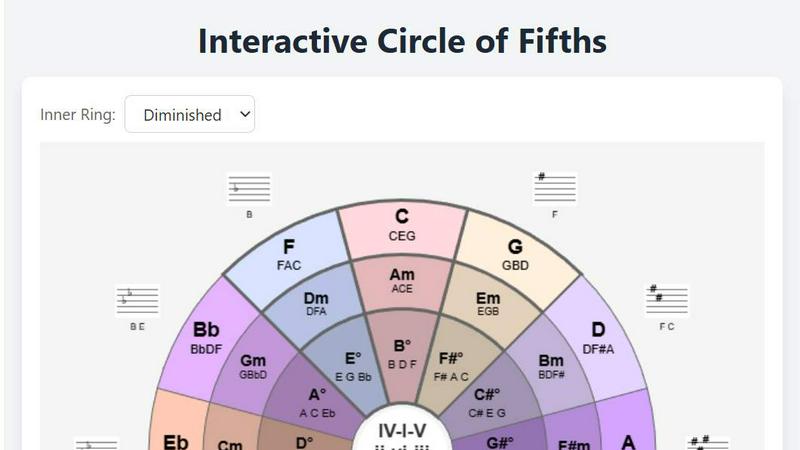
Interactive Circle of Fifths
PseudoRun

Feature Comparison
Interactive Circle of Fifths
Dynamic Circle & Inner Ring Scales
The central interactive circle is just the start. Tap on any key to instantly reconfigure the entire app's context. The innovative inner ring gives you one-tap access to essential scales beyond the standard major and minor, including the Pentatonic, Blues, Diatonic, and Diminished scales. This allows for deep, on-the-fly exploration of different musical colors and moods directly from your chosen root note, making scale theory practical and immediate.
Integrated Piano & Guitar Visualizers
Theory becomes tactile with our responsive instrument visualizers. Select any chord or scale, and the app immediately displays the correct notes and optimal fingerings on a clean, playable piano keyboard and guitar fretboard. This feature bridges the gap between knowing a chord symbol and physically playing it, accelerating your ability to apply theoretical knowledge to your instrument during practice or songwriting sessions.
Harmonized Scale & Chord Function Panel
Understand music at a deeper level. For any selected key, the app clearly displays the full harmonized scale (e.g., C, Dm, Em, F, G, Am, B°) alongside its Roman numeral analysis (I, ii, iii, IV, V, vi, vii°). Each chord is tagged with its scale degree and its common resolution path ("Resolves To"), teaching you the functional harmony that drives compelling chord progressions in a clear, visual format.
Interactive Chord Sequencer
Turn knowledge into music. Use the Chord Sequencer panel to build and audition chord progressions in real-time. Drag and drop chords from the harmonized scale to create a sequence, then play it back to hear how the chords flow together. This hands-on tool is perfect for experimenting with song structures, understanding cadences, and finding inspiration for your next composition directly within the app.
PseudoRun
IGCSE Exam-Focused Editor
This feature provides a coding environment built exclusively for the Cambridge IGCSE pseudocode specification. The editor understands and validates the exact syntax, keywords, and structures required for your exams, ensuring you're practicing the right way. It automatically highlights keywords and checks for common errors, keeping your learning 100% aligned with what you'll encounter on test day, right from your first line of code.
Real-Time Validation & Error Detection
Get instant feedback as you type. The platform continuously checks your pseudocode for syntax errors and logical mistakes, highlighting issues immediately. This real-time validation acts like a personal tutor, helping you correct errors on the fly and understand proper structure, which accelerates learning and builds confidence in writing flawless exam-ready algorithms.
Interactive Step-by-Step Debugger
Master complex algorithms by watching them execute line-by-line. This powerful debugger allows you to pause execution, step through code, and track how variable values change in real-time. It transforms abstract concepts into visual, understandable processes, providing deep insight into program flow, loop mechanics, and procedure calls—critical for tackling tough exam questions.
IGCSE Practice Library & Exam Mode
Access a curated library of 50+ IGCSE-style practice problems covering essential topics like loops, arrays, and procedures. To simulate real exam pressure, the integrated Exam Mode timer lets you practice solving problems under timed conditions. This combination helps you build not only understanding but also the speed and confidence needed to excel in your actual Computer Science exams.
Use Cases
Interactive Circle of Fifths
On-the-Go Music Theory Learning
Students and curious musicians can use the app during commutes or practice breaks for bite-sized learning. The mobile-first design makes it easy to explore a new key, scale, or chord relationship daily, turning spare moments into productive theory sessions that build a strong, intuitive foundation without needing a textbook or teacher present.
Songwriting and Chord Progression Inspiration
Songwriters facing writer's block can use the Interactive Circle to break out of creative ruts. Experiment with the Chord Sequencer to discover fresh progressions, use the "Resolves To" function to find satisfying chord movements, or tap through the inner ring scales to add new melodic flavors to a section of a song, all from your phone.
Practical Instrument Practice Aid
Guitarists and pianists can use the app as a smart practice companion. Instead of just running scales, select a scale from the inner ring and use the corresponding instrument visualizer to learn its pattern across the entire neck or keyboard. You can also drill chord changes by having the app cycle through the diatonic chords of a key while you follow along on your instrument.
Teaching and Lesson Planning
Music educators can leverage the app as a powerful visual aid during lessons. Its clear, interactive display is perfect for explaining concepts like the Circle of Fifths, chord functions, and scale construction on a student's device or a shared screen, making abstract theory concepts concrete and engaging for learners of all ages.
PseudoRun
Self-Paced Exam Preparation
Students can use PseudoRun independently to prepare for their IGCSE Computer Science papers. The platform allows you to work through syllabus topics at your own pace, write code for past paper questions, and use the step-by-step debugger to untangle complex algorithms. The exam-mode timer is perfect for honing time-management skills in a realistic practice environment.
Classroom Teaching & Demonstration
Educators can leverage PseudoRun as a powerful teaching tool in computer labs or during remote lessons. Teachers can demonstrate algorithmic concepts live on a projector, showing real-time execution and variable tracking. They can also create and share code snippets or full programs for students to study, debug, or modify as part of their classroom exercises.
Homework Assignment Completion
When tackling pseudocode homework, students can write, test, and debug their assignments directly within PseudoRun. The cloud storage feature means they can start work on a school computer, save it, and seamlessly continue from their personal device at home. Instant error checking helps them submit correct, working algorithms with confidence.
Last-Minute Revision & Concept Clarification
In the crucial days before an exam, PseudoRun serves as an ideal revision tool. Students can quickly load saved programs to review key algorithms, run through timed practice problems to gauge readiness, and use the debugger to clarify any last-minute doubts about how specific code segments, like nested loops or parameter passing, actually work.
Overview
About Interactive Circle of Fifths
The Interactive Circle of Fifths is your ultimate mobile companion for unlocking music theory. This isn't just a static diagram; it's a dynamic, touch-first learning app designed for musicians, songwriters, and students who want to move beyond rote memorization to genuine understanding. It transforms the foundational concept of the Circle of Fifths into an intuitive, interactive experience where you can see, hear, and feel chord relationships. The core value is in its seamless integration of theory and practice: instantly visualize the harmonized scale of any key, explore complex scales like Pentatonic, Blues, and Diminished directly from the inner ring, and apply your knowledge with integrated Piano and Guitar visualizers that show you exactly where to put your fingers. Whether you're a beginner deciphering your first major scale or an advanced player experimenting with chord progressions via the Chord Sequencer, this app makes complex concepts accessible and practical, directly on your phone or tablet.
About PseudoRun
PseudoRun is the premier, free online platform engineered exclusively for mastering IGCSE Computer Science pseudocode. It transforms algorithmic learning by providing a clean, interactive, and mobile-first environment where students can write, run, and debug code in real-time, directly within their browser. This app-centric approach eliminates the need for complex software installations, making it the perfect companion for studying on-the-go from any smartphone, tablet, or computer. Built with a laser focus on the Cambridge IGCSE syllabus, every feature—from syntax validation to practice problems—is meticulously aligned with official exam specifications and patterns. Designed for students, educators, and beginners, PseudoRun delivers instant feedback, step-by-step execution, and a distraction-free interface that prioritizes effective learning above all else. Its core mission is to bridge the gap between theoretical concepts and practical implementation, making algorithmic thinking accessible, engaging, and highly effective for exam success. With an unwavering promise of zero ads, complete privacy, and all core features free forever, PseudoRun stands as the dedicated, trusted companion for every IGCSE Computer Science student's journey from confusion to mastery.
Frequently Asked Questions
Interactive Circle of Fifths FAQ
Is the Interactive Circle of Fifths suitable for complete beginners?
Absolutely. The app is designed with a progressive learning curve. Beginners can start by simply tapping around the main circle to hear how keys relate, then gradually explore the major scale and basic chords using the piano/guitar guides. The visual and interactive approach is often more intuitive for beginners than traditional textbook methods.
Do I need an internet connection to use the app?
The core functionality of the Interactive Circle of Fifths is built to work offline once the app is installed. You can explore all keys, scales, chords, and visualizers without a connection, making it a reliable tool for practice anywhere, anytime.
Can I use this app for instruments other than piano and guitar?
While the dedicated visualizers are for piano and guitar, the core theory presented is universal. The knowledge of keys, scales, chord relationships, and Roman numeral analysis applies to all melodic instruments like saxophone, violin, or voice. The app teaches you the "what" and "why," which you can then apply to your specific instrument.
How does the "Rango on Spotify" integration work?
The "Rango on Spotify" feature connects your theoretical exploration to real-world music. It likely analyzes songs from Spotify to show you their key and chord structures, allowing you to see the theory you're learning in action within popular music, creating a powerful link between study and practical listening.
PseudoRun FAQ
Is PseudoRun really free to use with no hidden costs?
Yes, absolutely. PseudoRun is committed to being completely free for all its core features, forever. There are no premium tiers, subscription fees, or paywalls hiding essential tools like the editor, debugger, or practice problems. Our promise includes zero ads and a commitment to student privacy, ensuring a fully focused learning experience without any financial barriers.
Do I need to create an account or download software to start?
No, you can start coding immediately without any login or registration. Simply visit the website and begin writing pseudocode. For added convenience, you can create a free account to unlock cloud storage, allowing you to save your programs and access them from any device, but it is not a requirement to use the core editor and simulator.
How does PseudoRun ensure it aligns with the IGCSE syllabus?
The platform is engineered specifically for the Cambridge IGCSE Computer Science syllabus. The pseudocode syntax, keywords, and operational logic within the editor and simulator are built directly from the official Cambridge specification and past exam patterns. This ensures that every practice session is relevant and directly contributes to your exam success.
Can I use PseudoRun on my phone or tablet?
Yes, PseudoRun is designed with a mobile-first, responsive interface. It works seamlessly on smartphones, tablets, laptops, and desktop computers. The clean, intuitive layout adapts to your screen size, allowing you to write, run, and debug pseudocode effectively while on the go, making it a truly flexible study tool.
Alternatives
Interactive Circle of Fifths Alternatives
The Interactive Circle of Fifths is a premier app in the music education category, designed to help musicians visualize and understand chord relationships and scales. It's a powerful digital tool that transforms complex theory into an intuitive, interactive experience right on your device. Users often explore alternatives for various reasons. Some may seek a different pricing model or a free tier with core features. Others might need an app tailored for a specific instrument not covered, or prefer a simpler, more streamlined interface for quick reference. Platform availability, like needing a web-based tool versus a native mobile app, is another common factor. When choosing an alternative music theory app, consider your primary goal. Look for clear, interactive visualizations that work well on a small screen. Check if it supports your instrument with accurate fingerings and if its feature set—like scale libraries or practice tools—matches your learning style. A seamless, user-friendly experience is key for effective on-the-go learning.
PseudoRun Alternatives
PseudoRun is a dedicated, free online editor for mastering IGCSE Computer Science pseudocode. It falls into the education and learning category, providing a mobile-friendly platform for writing, testing, and debugging algorithms instantly in the browser, perfectly aligned with the Cambridge syllabus. Users often explore other options for various reasons. Some may need features beyond IGCSE focus, like support for other programming languages or collaborative tools. Others might be looking for downloadable software for offline use or platforms that integrate with specific learning management systems used by their school. When evaluating other tools, key considerations include alignment with your specific exam board's pseudocode standards, the quality of real-time feedback and debugging aids, and the overall user experience on your primary device. Ensuring the platform is truly ad-free and respects your privacy is also crucial for a focused learning environment.