
Fusedash vs SERPView
Side-by-side comparison to help you choose the right AI tool.

Fusedash instantly turns raw data into clear dashboards and charts for your team.
Last updated: March 4, 2026

SERPView
SERPView transforms Google Search Console data into actionable insights for unlimited SEO tracking and performance.
Last updated: March 1, 2026
Visual Comparison
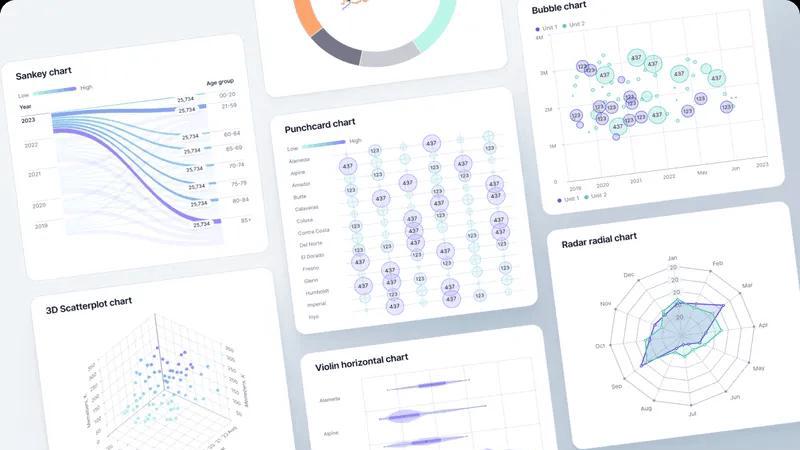
Fusedash
SERPView
Feature Comparison
Fusedash
Flexible Views
Build the right dashboard view for every audience within the same platform. Fusedash lets you transform a single dataset into interactive dashboards, standalone charts, detailed maps, or narrative report-style views. Customize layouts, filters, and time ranges for different stakeholders, ensuring each team sees what matters most without any extra back-and-forth or manual duplication of work.
AI Chart Generator
Instantly create clear, AI-powered charts from your CSVs or connected APIs. This feature acts as a fast visualizer, intelligently suggesting the right chart type, applying comparisons, and helping refine labels so your visuals tell the correct story at a glance. Generated charts can be used as standalone assets or seamlessly dropped into broader dashboards and reports for cohesive storytelling.
Unified Dashboard & Reporting Workspace
Go beyond static dashboards by combining real-time KPI monitoring with narrative context. This workspace allows you to embed storytelling sections directly alongside performance charts, making it clear what changed, why it matters, and what the next steps are. This integration reduces conflicting report versions and keeps all teams aligned on insights and actions.
AI-Powered Smart Chat
Accelerate data exploration and dashboard refinement using plain language. Ask questions about your data, request breakdowns by segment or region, and get intelligent suggestions for relevant metrics or chart types. You can then instantly turn these conversational insights into polished, shareable views that your team can use immediately within the platform.
SERPView
Performance Tracking
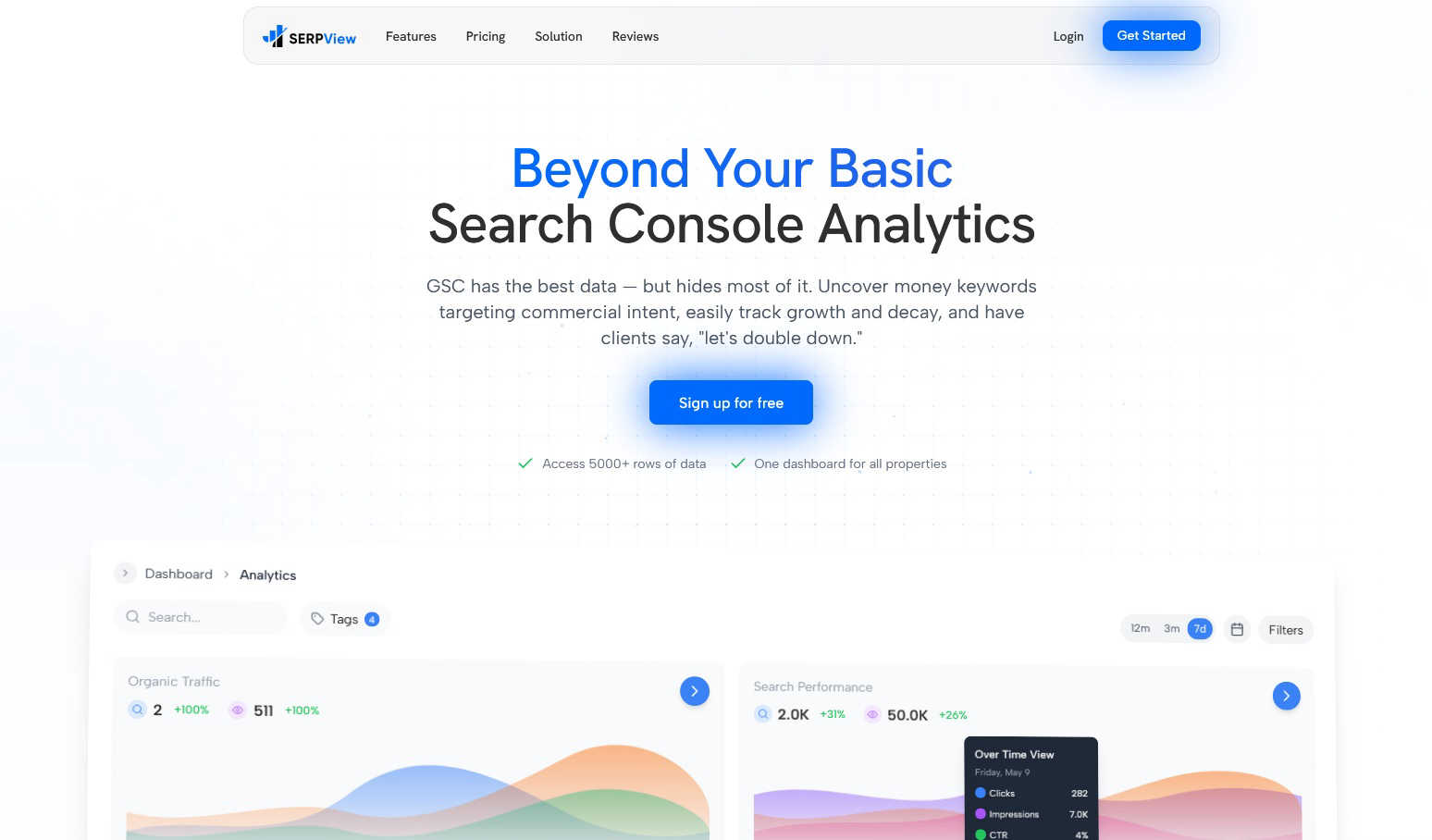
With SERPView, users can access up to 50,000 rows of Google Search Console data, far surpassing GSC's 1,000-row limit. This feature allows SEO professionals to comprehensively track clicks, impressions, CTR, and average positions without restrictions, enabling more informed decision-making.
Keyword Analysis
SERPView excels in uncovering high-value keywords with commercial intent. Users can identify new opportunities and monitor position changes over time, ensuring that they are always targeting the most relevant and profitable keywords for their business.
Page Analysis
Analyze the performance of individual web pages to determine which content resonates best with audiences. SERPView identifies underperforming pages and suggests optimization opportunities, helping marketers enhance their content strategy effectively.
Mobile vs Desktop Analysis
This feature allows users to compare performance metrics between mobile and desktop users, offering insights into where to focus their optimization efforts. By identifying trends and performance discrepancies, marketers can tailor their strategies to improve rankings and user experience.
Use Cases
Fusedash
Executive & Leadership Reporting
Provide leadership with a single, trusted source of truth. Consolidate data from multiple departments into a unified executive dashboard enriched with narrative storytelling. This gives leaders a clear, high-level view of performance against KPIs with the necessary context to understand drivers and make strategic decisions confidently.
Marketing Campaign Analysis
Enable marketing teams to move from data to insight rapidly. Connect campaign data from various APIs, visualize performance trends with AI-generated charts, and drill down into segments to see what's working. Share live dashboards with stakeholders to demonstrate ROI and adjust strategies in real-time without manual report rebuilding.
Operational Performance Monitoring
Give operations teams a real-time interface to monitor key processes and metrics. Create dashboards with maps to visualize geographic performance, set up automatic data refreshes, and use drill-downs to identify bottlenecks or regional issues instantly, ensuring swift, data-driven operational responses.
Cross-Departmental Data Alignment
Eliminate silos and conflicting data stories across an organization. By defining core metrics once in Fusedash and reusing them in dashboards for sales, finance, and customer support, every department operates from the same consistent numbers. This fosters alignment, reduces reconciliation time, and ensures collaborative action based on a shared reality.
SERPView
Comprehensive SEO Reporting
SEO teams can utilize SERPView to generate in-depth reports that consolidate data from multiple Google Search Console properties. This functionality streamlines the reporting process, making it easier for teams to analyze overall site performance and make strategic adjustments.
Keyword Opportunity Identification
Marketers can leverage SERPView to uncover lucrative keyword opportunities that may have previously gone unnoticed. By tracking keyword rankings and performance, they can refine their content and advertising strategies to better align with user intent.
Content Optimization
Content creators can use SERPView to analyze which pages are performing best and which ones need improvement. This enables teams to prioritize updates and enhancements based on data-driven insights, ultimately boosting organic search visibility.
International SEO Strategy Development
Businesses targeting global markets can benefit from SERPView's international SEO insights, which track performance across different countries and languages. This data helps marketers optimize their strategies to cater to regional audiences effectively.
Overview
About Fusedash
Fusedash is an AI-powered data visualization platform designed for teams that need clarity and action from their data, not just more charts. It acts as a unified mobile-first workspace where you can create decision-ready dashboards, interactive charts, detailed maps, and narrative reports without rebuilding the same logic across disconnected tools. The core value is consistency and efficiency: you define your key metrics and KPIs once, and then reuse those trusted definitions across every view and report. This ensures everyone—from leadership to marketing to operations—is aligned on the same numbers. Built for teams tired of manual reporting cycles and conflicting data stories, Fusedash empowers users to not only monitor what's happening through real-time interfaces but also understand why by drilling down into segments or time periods. With integrated AI features like natural language data chat and smart visualization assistance, it makes data exploration faster and more accessible. Simply connect your data via CSV or API, and Fusedash transforms it into a shared source of truth that drives alignment and informed action, all from an intuitive, app-centric interface.
About SERPView
SERPView is the ultimate mobile-first solution designed to enhance the Google Search Console (GSC) experience for SEO professionals and digital marketers. It addresses the common limitations of GSC, such as the restrictive 1,000-row data limit, by providing access to over 50,000 rows of unfiltered search performance data. This powerful analytics platform centralizes actionable intelligence, allowing users to manage multiple website properties seamlessly from a single, intuitive dashboard. SERPView empowers marketers to uncover hidden keyword opportunities, track performance across various devices and countries, and correlate trends with Google's algorithm updates. Whether users are in the office on a desktop or on the go with a mobile device, SERPView equips them with the insights needed to make rapid, data-driven decisions. Ultimately, SERPView goes beyond mere data presentation; it reveals the compelling story behind a brand's search presence.
Frequently Asked Questions
Fusedash FAQ
What types of data sources can I connect to Fusedash?
Fusedash is built for flexibility. You can start instantly by uploading CSV or Excel files. For live data, you can connect directly to various business APIs and databases. The platform also allows you to combine multiple datasets, including enriching your views with relevant public data, all within a single workspace.
How does the AI Chart Generator work?
The AI Chart Generator simplifies visualization. After you connect your dataset, the AI analyzes your data structure and suggests the most appropriate chart types to effectively communicate trends and comparisons. You maintain full control to refine labels, apply filters, and adjust the design, turning raw data into a clear visual story in minutes.
Can I create different views for different teams from the same data?
Absolutely. This is a core strength of Fusedash. You can build a master dataset with consistent metric definitions and then create multiple, tailored views from it. For example, a detailed, interactive dashboard for analysts, a high-level summary chart for executives, and a geographic map for field operations—all pulling from the same trusted source.
What is Smart Chat and how can it help my team?
Smart Chat is an integrated AI assistant within Fusedash. Instead of navigating complex menus, you can ask questions about your data in plain language, like "What were sales in Q3 by region?" or "Show me a breakdown of website traffic by source." The AI interprets your query, generates the answer visually, and helps you instantly convert that insight into a saved chart or dashboard view.
SERPView FAQ
What is SERPView?
SERPView is a mobile-first analytics platform that enhances Google Search Console by providing access to over 50,000 rows of search performance data. It simplifies SEO reporting and enables deeper insights for digital marketers.
How does SERPView improve data access compared to Google Search Console?
Unlike Google Search Console, which limits data access to 1,000 rows, SERPView grants users access to comprehensive search performance data, allowing for more detailed analysis and reporting without the usual restrictions.
Can I manage multiple Google Search Console properties with SERPView?
Yes, SERPView allows users to connect and manage multiple Google Search Console properties from a single dashboard, streamlining the SEO reporting process and making it easier to monitor overall performance.
Is SERPView suitable for mobile users?
Absolutely. SERPView is designed with a mobile-first approach, ensuring that users can access and analyze their SEO data seamlessly, whether they are on a desktop in the office or on their phone while on the go.
Alternatives
Fusedash Alternatives
Fusedash is an AI-powered data visualization and business intelligence platform. It helps teams unify their data to create consistent dashboards, charts, and reports, turning complex information into a shared source of truth for better decision-making. Users often explore alternatives for various reasons. These can include budget constraints, the need for specific integrations with their existing app stack, or requirements for more advanced or different feature sets. The search for the right tool is highly personal to a team's workflow and goals. When evaluating other options, consider your core needs. Look for a solution that offers the right balance of visualization power, ease of use, and collaborative features for your team's mobile-first, app-centric environment. Prioritize tools that provide consistent data definitions and real-time access to keep everyone aligned.
SERPView Alternatives
SERPView is a mobile-first analytics platform that enhances Google Search Console by providing deeper insights into search performance data. As an essential tool for SEO professionals and digital marketers, it enables users to track extensive metrics beyond the limitations of GSC, making it easier to analyze and optimize their online presence. Users often seek alternatives to SERPView for various reasons, including pricing, feature sets, or specific platform requirements that better fit their unique workflows. When considering alternatives, it’s crucial to evaluate the depth of data access, user interface intuitiveness, and the ability to generate actionable insights tailored to your needs. The goal is to find a solution that not only meets your technical demands but also enhances your overall user experience.