
RedVeil vs SVG to 3D
Side-by-side comparison to help you choose the right AI tool.

RedVeil
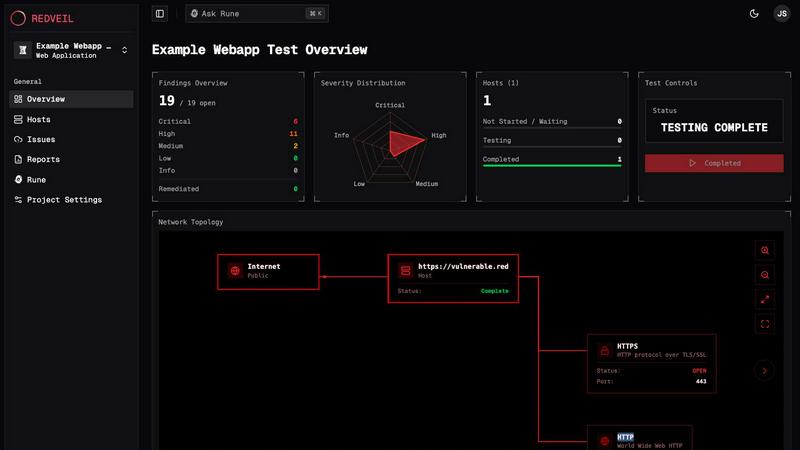
RedVeil delivers AI-driven penetration testing to uncover vulnerabilities quickly and cost-effectively for real.
Last updated: February 28, 2026
SVG to 3D
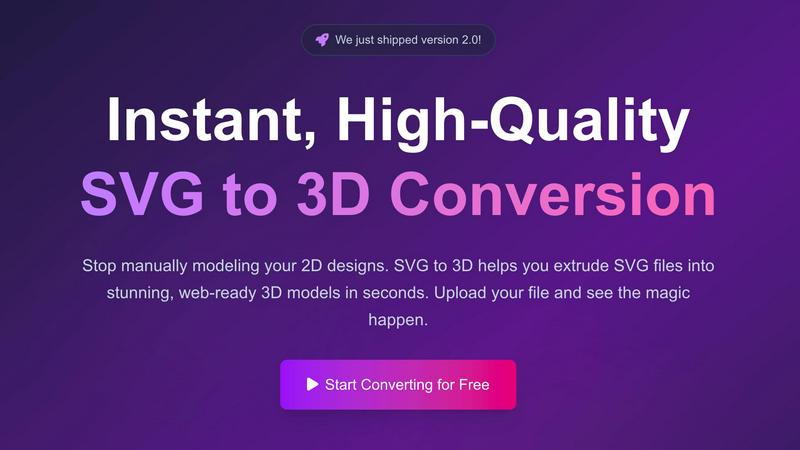
Easily transform your SVG files into stunning 3D models with advanced controls and lightning-fast processing.
Last updated: February 28, 2026
Visual Comparison
RedVeil
SVG to 3D
Feature Comparison
RedVeil
Rapid Deployment
RedVeil allows users to initiate penetration tests in mere minutes. This feature eliminates the need for scheduling and lengthy setup processes, enabling teams to stay agile and responsive to security needs as they arise.
Automated Reporting
Users receive professional, audit-ready reports almost immediately after testing. These reports are designed to cater to various stakeholders, including executives and technical teams, ensuring clear communication of security findings.
Multi-Step Attack Simulation
RedVeil's AI agents simulate complex attack paths similar to real-world cyber threats. This capability helps organizations understand potential risks in depth, revealing the true impact of vulnerabilities through comprehensive analysis.
One-Click Retesting
With RedVeil's One-Click Retesting feature, users can quickly verify the effectiveness of their remediation efforts. This ensures that security measures taken are effective, allowing teams to maintain security posture without delays.
SVG to 3D
One-Click GLB Export
With a single click, you can convert SVG files into web-optimized GLB formats. This feature is specifically tailored for web developers, allowing seamless integration into Three.js or React Three Fiber projects, enhancing the interactive experience of websites.
3D-Print Ready STL Exports
SVG to 3D provides clean STL exports that are directly compatible with slicer software for 3D printing. This feature ensures that designs can be brought to life physically without the need for complex CAD software, making the process straightforward and efficient.
Advanced 3D Modeling Controls
Users have the ability to go beyond basic extrusion with SVG to 3D. The tool offers options to adjust thickness, add bevels, and apply realistic PBR materials, all while providing a real-time 3D preview. This level of control ensures high-quality output that meets professional standards.
Lightning-Fast Processing
The tool is engineered with optimized algorithms that allow for near-instantaneous SVG to 3D conversions. Users can expect their files to be processed in seconds, making it one of the fastest online conversion tools available, ideal for busy designers and developers.
Use Cases
RedVeil
Continuous Security Testing
Organizations can utilize RedVeil for continuous security assessments, adapting to changes in their environments without waiting for annual audits. This ensures that vulnerabilities are identified and addressed proactively.
Compliance Readiness
RedVeil provides companies with compliance-ready reports for standards such as SOC 2, ISO 27001, and PCI-DSS. This simplifies the process of meeting regulatory requirements and demonstrates robust security practices to auditors.
Agile Development Support
In a fast-paced development environment, RedVeil integrates seamlessly into CI/CD pipelines, allowing security testing to keep pace with daily code deployments. This minimizes the risk of security vulnerabilities slipping through the cracks.
Security Awareness Training
RedVeil's findings can be used to enhance security awareness among development and operations teams. By illustrating real vulnerabilities and the implications of security flaws, teams can better understand the importance of secure coding practices.
SVG to 3D
Create Interactive 3D Logos
Designers can easily transform their SVG logos into interactive 3D models, perfect for enhancing web projects. The GLB export is optimized for frameworks like Three.js, allowing for dynamic and engaging user experiences.
Rapid Prototyping for 3D Printing
SVG to 3D serves as an efficient tool for creating prototypes from 2D designs. Users can generate STL files ready for 3D printing, streamlining the workflow from digital design to physical object.
UI/UX Design Enhancement
By converting SVG elements into 3D models, designers can add depth and realism to their mockups. This not only impresses clients and stakeholders but also enhances the overall user experience in digital interfaces.
Educational and Presentation Tools
Educators and presenters can utilize SVG to 3D to create visually impactful materials. Converting logos, diagrams, or infographics into 3D models can make presentations more engaging and informative.
Overview
About RedVeil
RedVeil is a pioneering AI-powered penetration testing platform designed to address the fast-paced needs of modern software development. Traditional penetration testing often involves lengthy engagements, resulting in delayed insights and high costs, which are not feasible for organizations deploying code multiple times a day. RedVeil revolutionizes this process by combining human-like reasoning with the efficiency of AI technology. With RedVeil, users can initiate a full, autonomous penetration test in minutes, producing actionable, audit-ready reports within hours. This solution is tailored for engineering teams, security professionals, and compliance officers who require continuous security assessments that align with their rapid development cycles. By leveraging advanced AI agents, RedVeil not only identifies exploitable vulnerabilities but also provides clear remediation guidance, ensuring that security remains an integral part of the development lifecycle.
About SVG to 3D
SVG to 3D is a revolutionary tool designed to effortlessly convert 2D SVG vector graphics into stunning, high-quality 3D models. This tool caters to a range of users, including web developers, graphic designers, and 3D printing enthusiasts, who often find traditional modeling software cumbersome for simple tasks. With SVG to 3D, you can transform your designs in seconds without the need for heavyweight applications like Blender or Cinema 4D. The primary value proposition lies in its simplicity, speed, and the ability to produce professional-grade 3D models ready for web integration or 3D printing. Users can upload their SVG files, adjust relevant parameters, and export their creations in multiple formats, making it an invaluable asset for anyone looking to enhance their digital projects or physical creations.
Frequently Asked Questions
RedVeil FAQ
Does RedVeil perform a real penetration test?
Yes, RedVeil conducts genuine penetration tests powered by sophisticated AI agents. These agents simulate real-world attacks to identify exploitable vulnerabilities effectively.
How many penetration tests can I do with my annual subscription?
The number of penetration tests varies based on the chosen subscription tier. Higher tiers allow for more tests, catering to the specific security needs of your organization.
Is there a chance that my web application or network could go down during the test?
RedVeil is designed to minimize disruption. While all testing carries some risk, the AI-driven approach is tailored to avoid actions that could lead to downtime, ensuring safe assessments.
Can I use RedVeil's penetration test reports to meet the requirements of my compliance?
Absolutely. RedVeil's reports are structured to align with various compliance frameworks, making it easier for organizations to satisfy regulatory requirements.
SVG to 3D FAQ
How does SVG to 3D work?
SVG to 3D converts 2D SVG files into 3D models using optimized algorithms. Users simply upload their SVG files, adjust settings, and then export their models in various formats, all within a web browser.
Is SVG to 3D free to use?
Yes, SVG to 3D offers a free version that allows users to convert SVG files into 3D models without any registration required. There may be additional features in premium versions, but basic usage is completely free.
What file formats can I export my 3D models to?
Users can export their 3D models in multiple formats including GLB, GLTF, OBJ, and STL. This flexibility ensures compatibility across various 3D frameworks and applications.
Are my designs secure when using SVG to 3D?
Yes, SVG to 3D prioritizes user privacy and security. Files are processed locally in your browser where possible, ensuring that your designs are not uploaded to external servers and remain confidential.
Alternatives
RedVeil Alternatives
RedVeil is an innovative penetration testing solution that harnesses the power of agentic AI, making it part of the AI Assistants category. Designed for modern engineering teams, RedVeil eliminates the slow, costly traditional pentesting process by delivering quick and actionable security audits. As organizations seek to deploy code frequently, users often look for alternatives that can provide similar or better features at a more accessible price point or cater to specific platform requirements. When searching for an alternative to RedVeil, consider factors such as the speed of testing, cost-effectiveness, and the depth of analysis provided. It's essential to evaluate the flexibility of scheduling and the availability of comprehensive, audit-ready reports that meet your compliance needs. A reliable alternative should not only match the unique demands of your engineering team but also enhance your overall security posture.
SVG to 3D Alternatives
SVG to 3D is a specialized tool designed to transform 2D SVG vector graphics into high-quality 3D models. It falls under the category of AI assistants, catering primarily to developers, designers, and 3D printing enthusiasts. Users often seek alternatives due to various reasons, including pricing, specific feature sets, or platform compatibility. They may also want to explore tools that provide additional functionalities or enhanced user experiences. When looking for an alternative, it’s crucial to consider factors such as ease of use, the quality of output, integration capabilities with existing workflows, and any unique features that could enhance productivity. A good alternative should streamline the 3D modeling process and cater to the specific needs of its users, ensuring a seamless experience in transforming designs.