
Agent to Agent Testing Platform vs SVG to 3D
Side-by-side comparison to help you choose the right AI tool.

Agent to Agent Testing Platform
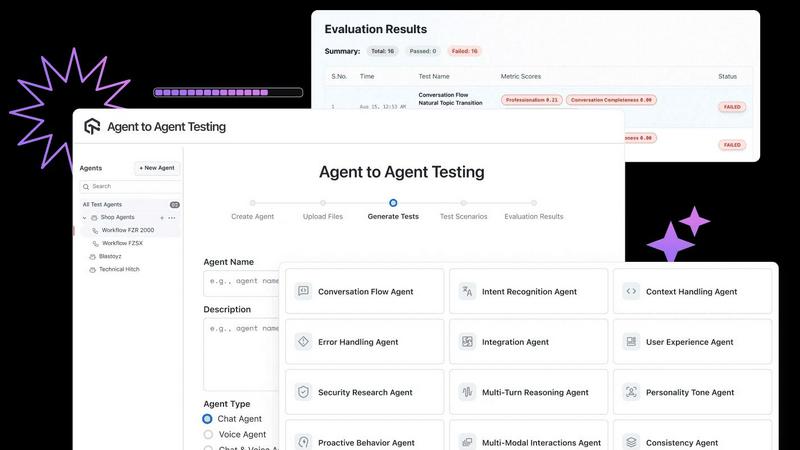
Validate AI agent performance across chat, voice, and multimodal systems to ensure security, compliance, and user.
Last updated: February 28, 2026
SVG to 3D
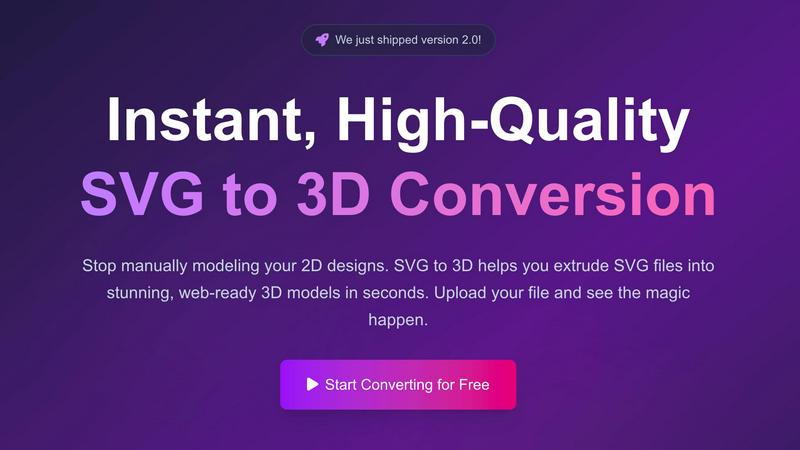
Easily transform your SVG files into stunning 3D models with advanced controls and lightning-fast processing.
Last updated: February 28, 2026
Visual Comparison
Agent to Agent Testing Platform
SVG to 3D
Feature Comparison
Agent to Agent Testing Platform
Automated Scenario Generation
This feature allows for the automatic creation of diverse test cases for AI agents, simulating a range of interactions including chat, voice, and hybrid scenarios. This comprehensive testing approach ensures that the AI can handle various real-world situations effectively.
True Multi-Modal Understanding
With the capability to define detailed requirements or upload PRDs, this feature assesses how AI agents respond to diverse inputs like images, audio, and video. It mirrors real-world scenarios, providing insights into the agent's performance across different formats.
Autonomous Test Scenario Generation
Users have access to a library of hundreds of pre-defined scenarios or can create custom scenarios tailored to specific needs. This feature helps in evaluating various agent types, such as those focused on personality tone, data privacy, and intent recognition.
Diverse Persona Testing
This feature leverages a variety of personas to simulate different end-user behaviors and interactions. By incorporating personas like International Caller and Digital Novice, it ensures that AI agents perform effectively across a broad spectrum of user types.
SVG to 3D
One-Click GLB Export
With a single click, you can convert SVG files into web-optimized GLB formats. This feature is specifically tailored for web developers, allowing seamless integration into Three.js or React Three Fiber projects, enhancing the interactive experience of websites.
3D-Print Ready STL Exports
SVG to 3D provides clean STL exports that are directly compatible with slicer software for 3D printing. This feature ensures that designs can be brought to life physically without the need for complex CAD software, making the process straightforward and efficient.
Advanced 3D Modeling Controls
Users have the ability to go beyond basic extrusion with SVG to 3D. The tool offers options to adjust thickness, add bevels, and apply realistic PBR materials, all while providing a real-time 3D preview. This level of control ensures high-quality output that meets professional standards.
Lightning-Fast Processing
The tool is engineered with optimized algorithms that allow for near-instantaneous SVG to 3D conversions. Users can expect their files to be processed in seconds, making it one of the fastest online conversion tools available, ideal for busy designers and developers.
Use Cases
Agent to Agent Testing Platform
Quality Assurance for Chatbots
Enterprises can utilize the platform to perform thorough testing of chatbots before they go live. By simulating real user interactions, businesses can identify issues related to bias, toxicity, and hallucinations, thereby enhancing user experience.
Voice Assistant Validation
Organizations can validate the performance of voice assistants by running extensive tests that replicate real-world usage. This ensures that these AI agents provide accurate and contextually relevant responses in voice interactions.
Phone Caller Agent Testing
The platform can be used to assess the effectiveness of phone caller agents. By simulating thousands of interactions, businesses can ensure that these agents handle customer inquiries with professionalism and empathy.
Regression Testing for Continuous Improvement
The Agent to Agent Testing Platform enables continuous regression testing as new features are added to AI agents. This ensures that updates do not introduce new issues, maintaining a high standard of quality and performance.
SVG to 3D
Create Interactive 3D Logos
Designers can easily transform their SVG logos into interactive 3D models, perfect for enhancing web projects. The GLB export is optimized for frameworks like Three.js, allowing for dynamic and engaging user experiences.
Rapid Prototyping for 3D Printing
SVG to 3D serves as an efficient tool for creating prototypes from 2D designs. Users can generate STL files ready for 3D printing, streamlining the workflow from digital design to physical object.
UI/UX Design Enhancement
By converting SVG elements into 3D models, designers can add depth and realism to their mockups. This not only impresses clients and stakeholders but also enhances the overall user experience in digital interfaces.
Educational and Presentation Tools
Educators and presenters can utilize SVG to 3D to create visually impactful materials. Converting logos, diagrams, or infographics into 3D models can make presentations more engaging and informative.
Overview
About Agent to Agent Testing Platform
Agent to Agent Testing Platform is a pioneering AI-native quality assurance framework designed to validate the behavior of AI agents in real-world scenarios. As AI systems evolve to be more autonomous, traditional QA methodologies, which were built for static software, become inadequate. This platform addresses the pressing need for comprehensive testing by evaluating multi-turn conversations across various modalities including chat, voice, and phone interactions. It empowers enterprises to validate their AI agents before deployment, ensuring reliability and performance. The unique assurance layer it introduces leverages multi-agent test generation, utilizing over 17 specialized AI agents to expose long-tail failures, edge cases, and interaction patterns often overlooked in manual testing processes.
About SVG to 3D
SVG to 3D is a revolutionary tool designed to effortlessly convert 2D SVG vector graphics into stunning, high-quality 3D models. This tool caters to a range of users, including web developers, graphic designers, and 3D printing enthusiasts, who often find traditional modeling software cumbersome for simple tasks. With SVG to 3D, you can transform your designs in seconds without the need for heavyweight applications like Blender or Cinema 4D. The primary value proposition lies in its simplicity, speed, and the ability to produce professional-grade 3D models ready for web integration or 3D printing. Users can upload their SVG files, adjust relevant parameters, and export their creations in multiple formats, making it an invaluable asset for anyone looking to enhance their digital projects or physical creations.
Frequently Asked Questions
Agent to Agent Testing Platform FAQ
What types of AI agents can be tested using this platform?
The platform supports testing for a wide range of AI agents including chatbots, voice assistants, and phone caller agents. It is designed to evaluate their performance across various interaction modalities.
How does the platform ensure comprehensive testing?
The Agent to Agent Testing Platform employs automated scenario generation and multi-agent testing, creating diverse test cases that cover a broad spectrum of potential user interactions, including edge cases and long-tail failures.
Can I create custom test scenarios?
Yes, users can create custom scenarios tailored to specific requirements while also accessing a library of hundreds of pre-defined testing scenarios that cover various functionalities and performance metrics.
What metrics can be evaluated with this platform?
The platform evaluates key performance metrics such as bias, toxicity, hallucination, effectiveness, accuracy, empathy, and professionalism, providing a comprehensive analysis of AI agent performance.
SVG to 3D FAQ
How does SVG to 3D work?
SVG to 3D converts 2D SVG files into 3D models using optimized algorithms. Users simply upload their SVG files, adjust settings, and then export their models in various formats, all within a web browser.
Is SVG to 3D free to use?
Yes, SVG to 3D offers a free version that allows users to convert SVG files into 3D models without any registration required. There may be additional features in premium versions, but basic usage is completely free.
What file formats can I export my 3D models to?
Users can export their 3D models in multiple formats including GLB, GLTF, OBJ, and STL. This flexibility ensures compatibility across various 3D frameworks and applications.
Are my designs secure when using SVG to 3D?
Yes, SVG to 3D prioritizes user privacy and security. Files are processed locally in your browser where possible, ensuring that your designs are not uploaded to external servers and remain confidential.
Alternatives
Agent to Agent Testing Platform Alternatives
The Agent to Agent Testing Platform is an innovative AI-native quality assurance framework designed specifically for validating the behavior of AI agents across various communication channels such as chat, voice, and phone interactions. As organizations increasingly rely on autonomous AI systems, traditional quality assurance methods often fail to address the complexities and unpredictability of these advanced technologies. Users frequently seek alternatives due to factors such as pricing, feature sets, and compatibility with existing infrastructure, as well as the need for a more tailored approach to their testing requirements. When looking for an alternative to the Agent to Agent Testing Platform, it's essential to consider various factors, including the comprehensiveness of testing capabilities, scalability, and the ability to simulate real-world interactions. Additionally, evaluate the platform's ability to ensure security and compliance, as well as the depth of insights it provides into AI agent performance. Prioritizing these aspects can significantly enhance your decision-making process and lead to a solution that better fits your organization's needs.
SVG to 3D Alternatives
SVG to 3D is a specialized tool designed to transform 2D SVG vector graphics into high-quality 3D models. It falls under the category of AI assistants, catering primarily to developers, designers, and 3D printing enthusiasts. Users often seek alternatives due to various reasons, including pricing, specific feature sets, or platform compatibility. They may also want to explore tools that provide additional functionalities or enhanced user experiences. When looking for an alternative, it’s crucial to consider factors such as ease of use, the quality of output, integration capabilities with existing workflows, and any unique features that could enhance productivity. A good alternative should streamline the 3D modeling process and cater to the specific needs of its users, ensuring a seamless experience in transforming designs.