

Alternatives to Tuning Engines
Tuning Engines is a unified AI runtime that lets you govern, optimize, and deploy any model through one secure API with zero infrastructure markup.
Explore 20 alternatives to Tuning Engines. Compare features, pricing, and find the best fit for your needs.
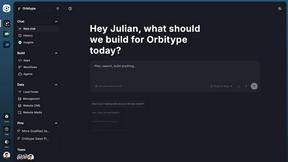


benchmark.directory
An AI tools directory that turns down money. 146 listings, 20 categories, no sponsored placement and no affiliate ordering.

saasgrow.ai
Submit your SaaS growth tool free. Pass screening and get a permanent listing page, a dofollow link, and real visibility.

Tools Network
Tools Network is a curated directory that brings the internet's best AI tools together in one organized, easy-to-navigate place.



Postqued
Schedule and publish social content across 10 platforms with one dashboard, API, and MCP built for teams and AI agents.

EntreDash
Turn daily annoyances and raw ideas into inventions, products, and businesses. EntreDash provides a virual personal advisory board using AI automation

AI Image Remover
AI Image Remover is a free browser tool for erasing people and objects from photos. Upload an image, brush a mask over the distraction

Wisegrid
Spreadsheet-native work management with AI formulas, dashboards, automation, reporting, and project views for growing teams.

Groniz
Run your social media on autopilot with AI agents. Post & schedule to 32+ networks from Claude Code, Codex, or Console.
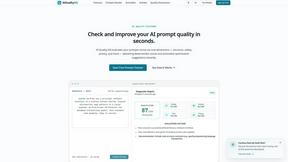
AIQualityHQ
AIQualityHQ instantly analyzes your AI prompts for structure, safety, and privacy risks, delivering actionable scores in under 10 milliseconds.
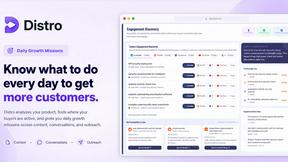
Distro
Distro is an AI operator that finds live buyer demand and drafts conversations in your voice so you just approve.
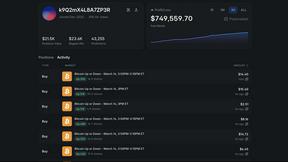
Polymarket Trading Bot For Crypto
Automate profitable Bitcoin up or down trades on Polymarket with a proven bot that turns $68 into millions.
HyperLake
HyperLake is your command center for deploying sovereign AI agent infrastructure in your cloud with zero compute markup and governed access.

Minded
Record once to train AI agents that clear tasks off your plate in minutes, all managed in plain English.

Klaws
Klaws is an AI agent that works 24/7, learns anything, and ships real tasks like research, emails, and code while you sleep.

Playwriter
Playwriter lets your agents control Chrome seamlessly with AI, utilizing existing sessions and full Playwright API without bot detection.
About Tuning Engines Alternatives
Tuning Engines is a unified AI control and governance layer designed for teams building production intelligence across models, agents, tools, and fine-tuned systems. It belongs to the automation and AI operations category, serving as an orchestration platform that consolidates the full AI lifecycle into a single governed environment. Users often look for alternatives due to specific pricing models, missing feature sets, or platform compatibility needs, such as requiring lighter-weight tools for smaller teams or deeper integration with proprietary infrastructure. When choosing an alternative, look for robust governance controls like role-based access and audit trails, flexible model routing and fallback policies, and strong support for agent and tool integrations to ensure your AI workflows remain secure, observable, and scalable. The ideal alternative should offer seamless compatibility with popular development environments and coding agents, while providing clear cost management through per-key budgets and usage analytics. Evaluate how well the platform handles the full lifecycle from inference and fine-tuning to evaluations and guardrails, as fragmentation in these areas can lead to operational overhead. Prioritize solutions that deliver policy-as-code capabilities and tenant isolation for multi-team deployments, ensuring that the alternative can grow with your organization without sacrificing control or performance.
FAQs about Tuning Engines Alternatives
What is Tuning Engines?
Tuning Engines is a unified AI control and governance layer that orchestrates the full lifecycle of production intelligence across models, agents, tools, and fine-tuned systems. It brings together inference, model routing, fallback policies, fine-tuning jobs, datasets, evaluations, guardrails, and usage analytics into a single governed platform. Developers get OpenAI-compatible APIs and CLI workflows, while admins gain role-based access, per-key budgets, and audit trails for secure, observable deployment.
Who is Tuning Engines for?
Tuning Engines is built for development teams and administrators who are moving beyond isolated AI experiments into production-scale AI operations. It serves developers who need unified APIs and integrations with coding agents like Claude Code, Cursor, and VS Code, as well as admins who require governance controls such as tenant isolation, billing management, and policy-as-code. The platform is ideal for organizations that need a secure, cost-aware, and extensible operating layer for multi-model, multi-agent AI workflows.
Is Tuning Engines free?
The provided content does not specify whether Tuning Engines offers a free tier, but it does describe features like API keys, billing controls, and per-key budgets, indicating a commercial pricing model with usage-based components. For specific pricing details, including any free trial or tier, you would need to consult the official Tuning Engines documentation or contact their sales team. The platform is designed for production-scale use, which typically involves paid plans to support governance, scalability, and team management.
What are the main features of Tuning Engines?
Tuning Engines provides a comprehensive set of features including inference, model routing, fallback policies, fine-tuning jobs, dataset management, evaluations, model imports and exports, custom models, agents, MCP servers, reusable skills, guardrails, and AGT YAML policies. It also offers data capture, runtime traces, usage analytics, API key management, billing, team roles, and integrations with coding agents like Aider, Cline, and Windsurf. Admins benefit from role-based access, per-key budgets, rate limits, credential sources, and tenant isolation for secure multi-team deployments.